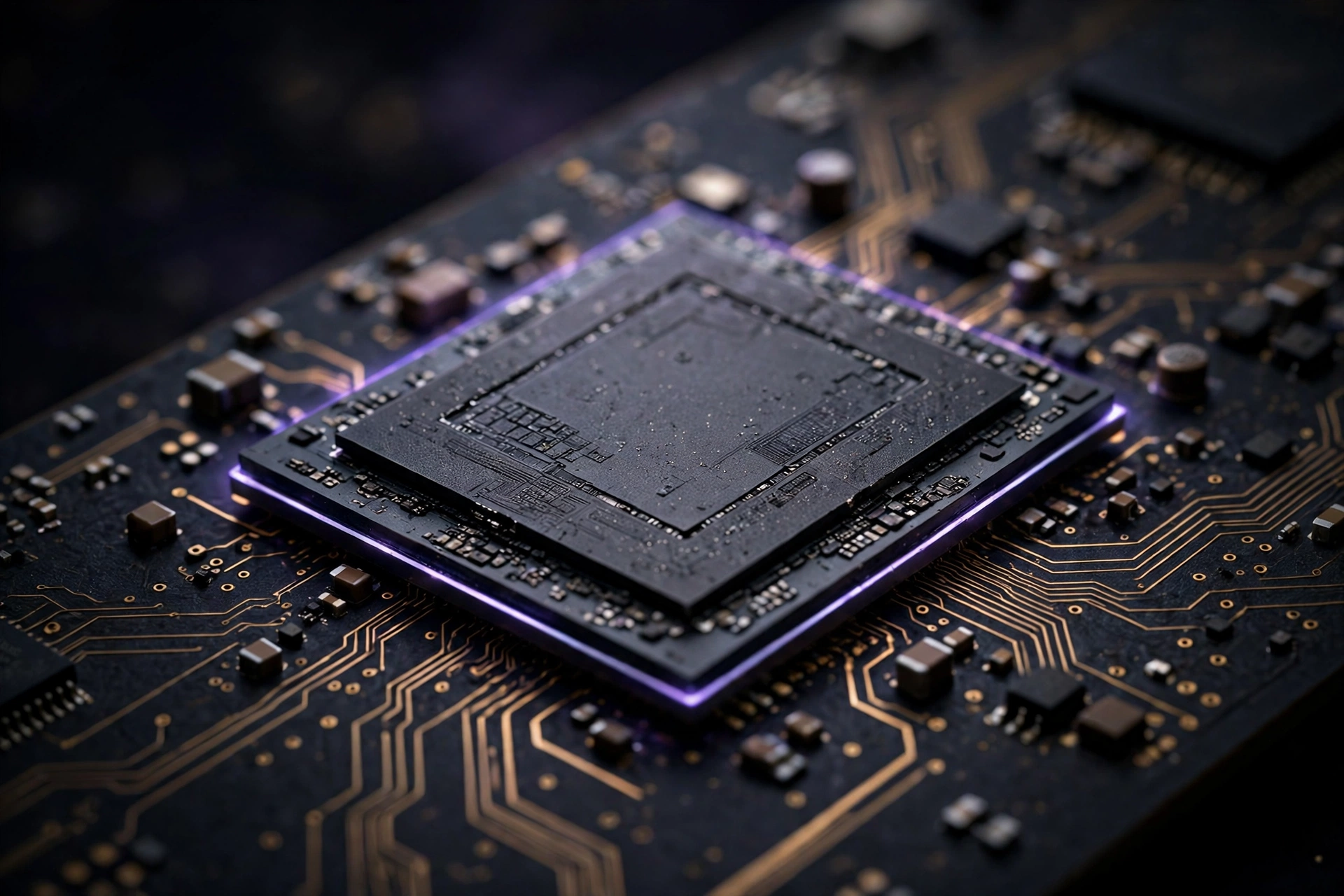

Snapdragon 8 Elite Gen 4 is the original Snapdragon 8 Elite, announced by Qualcomm on October 21, 2024. NanoReview lists it under the page title Qualcomm Snapdragon 8 Elite (Gen 4), at a web address that still uses the older Snapdragon 8 Gen 4 wording. That wording is a leftover label, not a separate chip.
The Snapdragon 8 Elite Gen 4 listing is a specification and benchmark record, not a phone review. It pools user-submitted results into crowd aggregates, so every score below is labelled (CR) unless a named lab reviewer is cited.
In Brief
- Snapdragon 8 Elite Gen 4: eight Oryon cores, two at up to 4.32GHz and six at up to 3.53GHz, built by TSMC on a 3 nanometer process.
- Graphics: Adreno 830 at 1,100MHz, with 1,536 total shaders. Memory: LPDDR5X up to 24GB. Modem: Snapdragon X80.
- Crowd scores (CR): AnTuTu 11 total 3,126,402; Geekbench 6 single-core 3,013 and multi-core 9,287; 3DMark Solar Bay 10,874.
- Top listed phones with Snapdragon 8 Elite Gen 4 reach higher AnTuTu 11 totals than the chip aggregate, which shows why phone choice matters.
- No chip price is stated, and no controlled battery endurance result was found in the sources checked. Judge the complete phone, not the chip name alone.
Why the Snapdragon 8 Elite Gen 4 Still Matters
The Snapdragon 8 Elite Gen 4 set the pattern Qualcomm kept. It replaced Arm cores with custom Oryon cores and moved to a 3 nanometer TSMC process, paired with the Adreno 830 GPU and Snapdragon X80 modem. Later chips raised clocks and changed GPUs and modems.
A Snapdragon 8 Elite Gen 4 phone bought in 2026 is usually bought on condition, battery health and software support, not on launch hype.
Variant checks matter too. NanoReview lists the standard prime clock at 4.32GHz, and notes an SM8750-AC model at 4.47GHz, with a GPU 100MHz faster. Qualcomm lists 4.47GHz on its product page. Confirm the For Galaxy variant before comparing scores.
Snapdragon 8 Elite Gen 4 Specs: CPU, GPU and Memory
Snapdragon 8 Elite Gen 4 uses eight Oryon cores: two Phoenix L cores at up to 4.32GHz and six Phoenix M cores at up to 3.53GHz. The listing gives 192KB of L1 cache, 12MB of L2 cache and 8MB of L3 cache. The 8W sustained power limit is a chip ceiling, not a battery result.
The GPU is the Adreno 830, listed at 1,100MHz, with 1,536 total shaders and 3,379.2 Gigaflops. It supports Vulkan 1.3, OpenCL 3.0 and DirectX 12.1. CPU-Monkey reports Qualcomm claiming around 40 percent faster graphics than the Adreno 750, a manufacturer claim (MF), not an independent measurement.
Memory support is LPDDR5X at 5,300MHz, with bandwidth listed as 84.8 Gb/s and a maximum of 24GB. Storage covers UFS 4.0 and UFS 4.1. No TOPS figure is listed for the Hexagon neural processor.
Camera and video support is broad on paper: a single camera up to 320MP, and video at 8K at 60 frames per second and 4K at 120 frames per second. Those are platform ceilings, so the phone specification sheet governs what a buyer actually gets.
Snapdragon 8 Elite Gen 4 Benchmarks: Reading the Crowd Scores
The headline figures below come from the NanoReview listing for Snapdragon 8 Elite Gen 4, and every one is a crowd aggregate (CR). NanoReview pools user-submitted results from different phones, so the numbers show the general level, not a controlled laboratory result. Its composite ratings are 92 for CPU, 87 for gaming, 93 for battery and 91 overall.
Testing note: No published same-chassis lab test exists; treat phone scores as orientation only. Results come from different retail phones tested at different times, not a controlled duel.
The AnTuTu 11 total of 3,126,402 is made up of a CPU score of 893,474, a GPU score of 1,133,808, a memory score of 427,210 and a UX score of 671,910. Those four parts add exactly to the total, and the GPU part is about 36 percent of it.
Geekbench 6 shows a multi-core score about 3.1 times the single-core score, at 9,287 against 3,013. Solar Bay at 10,874 tests ray tracing. PCMark 3.0 at 19,246 rests on only 36 models, so it should carry the least weight.
Sustained performance depends on cooling design and software tuning as much as on the chip itself. A thicker phone with a better vapour chamber can outperform a thinner phone on the same silicon. Recent AnTuTu 12 and Geekbench 7 entries were not used, because those versions cannot sit beside AnTuTu 11 or Geekbench 6 figures.
Snapdragon 8 Elite Gen 4 Phones and Lab Scores
The Snapdragon 8 Elite Gen 4 phone list shows how much results spread across bodies. Its AnTuTu v11 column puts the ZTE Nubia Red Magic 10 Pro Plus first at 3,543,672, about 13 percent above the chip aggregate. The next entries are the Motorola Razr Ultra (2026), Realme GT 8 (China), OnePlus Ace 6 and Xiaomi Redmi K100.
Lab reviewer testing must not be averaged with the crowd figures above. NotebookCheck testing gives Geekbench 6.7 single-core 3,200 and multi-core 10,020 for the Galaxy S25 Ultra (For Galaxy variant), and 3,050 and 9,019 for the Honor Magic7 Pro. Its AnTuTu v10 totals are 2,262,067 and 2,474,369. Those are Geekbench 6.7 and AnTuTu v10 results (LR).
Battery and Charging: A Phone Property
No controlled endurance result for a named Snapdragon 8 Elite Gen 4 phone appeared in the sources checked, and no charging speed was verified. The NanoReview battery rating of 93 is a composite rating, not hours of screen time. Battery size, display and software tuning decide endurance far more than the chip name.
Bottom line on battery: No identical-condition battery duel was found. Treat battery life and charging speed as properties of the specific phone, not of the chip. Do not pick a chip winner on battery.
Connectivity in Practice
The Snapdragon 8 Elite Gen 4 modem is the Snapdragon X80 5G Modem-RF System, with peak download speed of 10 Gbps and peak upload speed of 3.5 Gbps on the Qualcomm product page. Qualcomm also lists mmWave support and Wi-Fi 7 at a peak speed of 5.8 Gbps. Peak speeds are modem ceilings, not live network speeds.
In practice, the extra modem headroom matters mainly for buyers in the US, where Verizon and AT&T operate mmWave networks, and for users who already own a Wi-Fi 7 router. Most buyers in Bangladesh, South Asia and much of Europe on sub-6GHz 5G or LTE will see no daily benefit.

Confirmed, Reported and Unknown
- Confirmed: Snapdragon 8 Elite Gen 4 was announced on October 21, 2024, uses eight Oryon cores, and is built by TSMC on a 3 nanometer process.
- Reported: Qualcomm is reported to claim around 40 percent faster graphics than the Adreno 750, and secondary listings identify the process as N3E.
- Unknown: no chip price, no global phone price, no measured battery endurance and no TOPS figure could be verified. Bangladesh availability must be confirmed per phone and per seller.
Quick Answers
What is the Snapdragon 8 Elite Gen 4 AnTuTu 11 score?
The Snapdragon 8 Elite Gen 4 crowd aggregate (CR) is 3,126,402 for AnTuTu 11, with a CPU part of 893,474, a GPU part of 1,133,808, a memory part of 427,210 and a UX part of 671,910.
Is the Snapdragon 8 Elite Gen 4 the same as Snapdragon 8 Elite Gen 5?
No. Gen 5 is a later chip announced on September 25, 2025, with higher clocks, an Adreno 840 GPU and a Snapdragon X85 modem.
Which phones use this chip?
Examples include the Galaxy S25 Ultra, Xiaomi 15 Pro and Asus ROG Phone 9, plus the ten phones in the NanoReview listing. Confirm the chip name and variant on the exact model before buying.
Should I buy a phone with this chip in 2026?
It depends on the complete phone and the price. A well reviewed, well cooled phone with good battery health and clear software support can still be a sensible buy below newer flagship prices.
The Takeaway
- Consider a Snapdragon 8 Elite Gen 4 phone if you want flagship level CPU and GPU headroom, and the complete phone earns strong reviews for cooling and software support.
- Consider a Snapdragon 8 Elite Gen 4 phone if the price is clearly below a newer flagship, and you have confirmed the variant, configuration, battery health and warranty terms.
- Look elsewhere if you need the newest modem or GPU, the longest remaining software support, or if the seller cannot confirm the exact variant.
- Look elsewhere if battery endurance is your main concern and no trusted review has measured it for that exact phone model.
At the same price, prefer the better-reviewed complete phone over the better chip name. Screen quality, camera tuning, battery size and software updates matter more than a small benchmark gap.
The CPU gap to newer chips is real. The GPU headroom remains strong. Battery is phone dependent. Buy the phone, not the label.

Sources
- NanoReview, Qualcomm Snapdragon 8 Elite (Gen 4): specs and benchmarks, https://nanoreview.net/en/soc/qualcomm-snapdragon-8-gen-4. Ground source for every spec and benchmark figure in this article, read in full on October 29, 2026.
- Qualcomm, Snapdragon 8 Elite Mobile Platform, https://www.qualcomm.com/products/mobile/snapdragon/smartphones/snapdragon-8-series-mobile-platforms/snapdragon-8-elite-mobile-platform. Corroborates the Oryon CPU, Adreno GPU, X80 modem speeds, FastConnect 7900 Wi-Fi 7 peak speed and the 4.47GHz variant clock.
- NotebookCheck, Affordable flagship with Bose subwoofer: Xiaomi Poco F8 Ultra review, via search result extract read October 29, 2026. Source for the lab reviewer (LR) Geekbench 6.7 and AnTuTu v10 phone scores for the Galaxy S25 Ultra and Honor Magic7 Pro.
- CPU-Monkey, Qualcomm Snapdragon 8 Gen 3 vs Qualcomm Snapdragon 8 Elite, via search result extract read October 29, 2026. Corroborates the CPU layout, N3E process identification, the Adreno 830 claim and the example phones.
- GizmoChina, Dimensity 9500 vs Snapdragon 8 Elite: Benchmarks and Specs, via search result extract read October 29, 2026. Corroborates the announcement date, N3E process, CPU layout, Adreno 830, X80 speeds and Wi-Fi 7 peak speed.
- NanoReview, Qualcomm Snapdragon 8 Elite Gen 5: specs and benchmarks, via search result extract read October 29, 2026. Used only to distinguish the later Gen 5 chip in the FAQ answer.
Score methodology: Lab-reviewer (LR) scores come from named outlets controlled testing. Crowd (CR) scores come from aggregator databases (NanoReview) that pool user-submitted results and are less controlled. Company (MF) numbers are manufacturer claims. LR scores are treated as the strongest evidence, CR as directional, and MF as attributed. PetaTech24 did not test this chip.