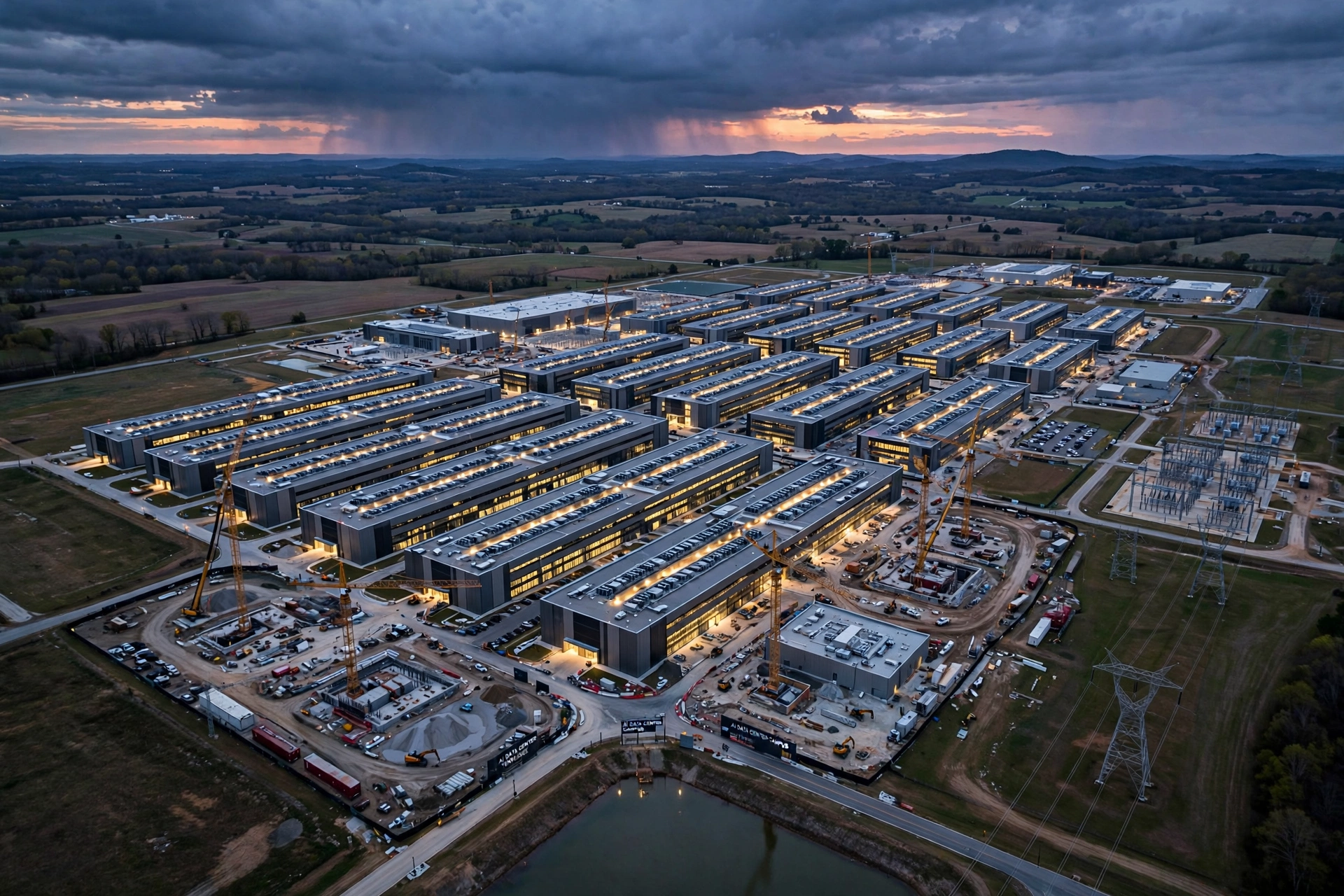
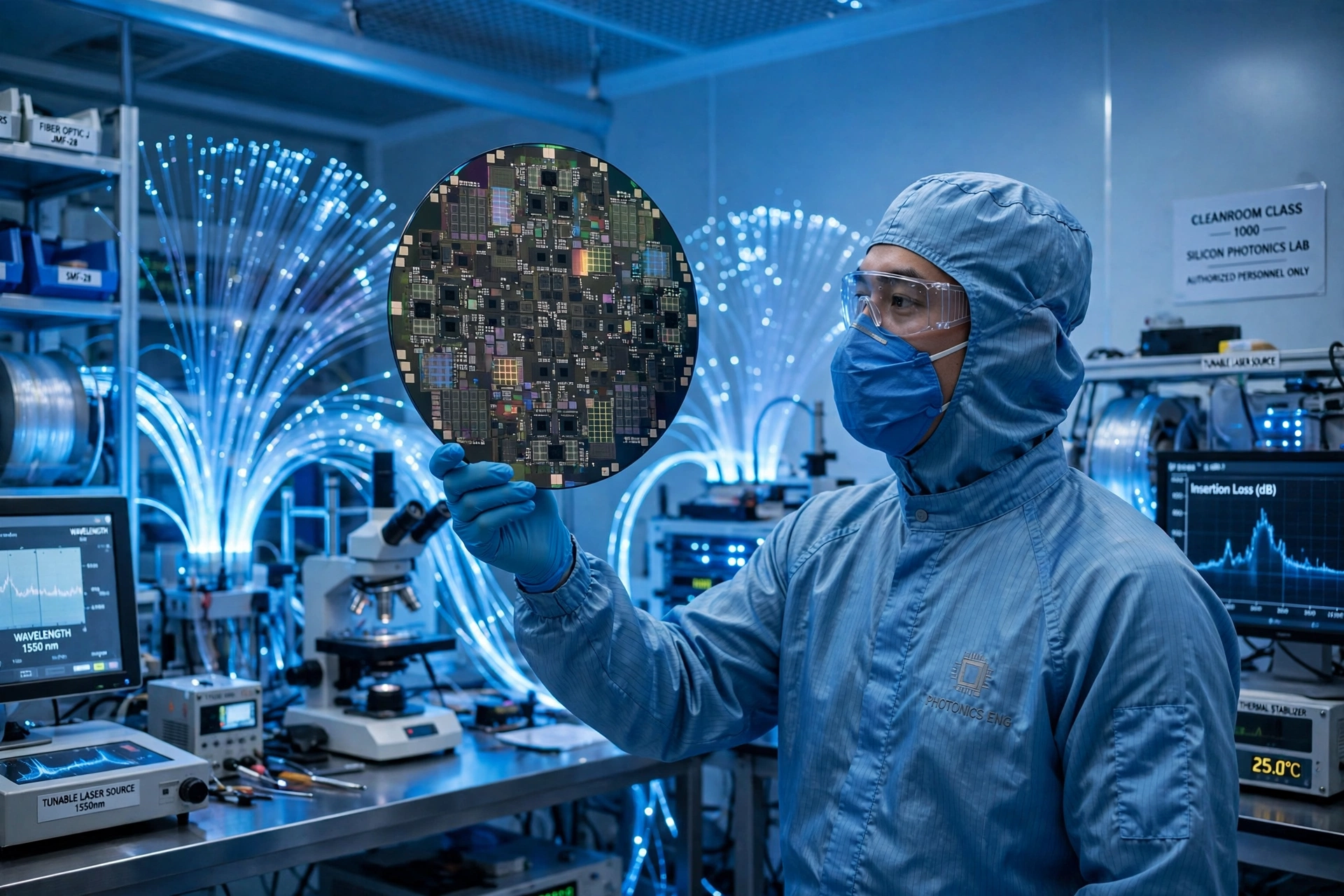
 Marvell is paying about $80 billion for the company that makes the lasers inside AI data centers, and the Marvell Lumentum deal is a bet that light, not silicon, decides who wins the next phase of the AI buildout.
The Marvell Lumentum deal is now official. Marvell Technology has agreed to buy optical components maker Lumentum Holdings in an all-stock transaction worth roughly $80 billion in equity, or about $115 billion including debt. Lumentum shareholders will receive 4.5 Marvell shares for each Lumentum share, a ratio that values Lumentum at about $1,132 per share, a premium of roughly 23.9 percent over its October 28 closing price.
It is one of the largest technology deals ever announced, and it arrives at a moment when the AI industry is quietly shifting its biggest bottleneck. The fastest AI chips in the world are now limited less by compute than by how quickly data moves between them. That movement runs on light, and Lumentum makes the lasers that produce it.
Marvell is best known for custom AI chips, including work for Amazon Web Services, and for the data-center networking silicon that connects servers. Lumentum brings the other half of that connection: high-performance lasers, optical transceivers and the indium phosphide fabs that make them. Together, the combined company plans to sell the full stack of AI connectivity, from electrical interconnect to optical links to switching.
The Short Version
- The deal: Marvell will buy Lumentum in an all-stock transaction worth about $80 billion in equity, about $115 billion including debt.
- The price: 4.5 Marvell shares per Lumentum share, implying about $1,132 per Lumentum share, a 23.9 percent premium over the October 28 close.
- The split: Marvell shareholders will own about 67 percent of the combined company, Lumentum shareholders about 33 percent.
- The logic: AI data centers are shifting from copper to optical connections, and Lumentum owns the lasers and fabs that shift depends on.
- The timeline: the deal is expected to close in the first half of 2028, subject to shareholder and regulatory approvals.
- The catch: the exchange ratio is fixed, so what Lumentum holders actually receive will float with Marvell’s share price until closing.
Why the Marvell Lumentum Deal Is About Light, Not Chips
Marvell chief executive Matt Murphy put the logic in one sentence: “AI infrastructure is undergoing a fundamental architectural shift toward optical connectivity, creating an opportunity that comes along once in a generation.” The shift he describes is already visible inside the largest AI data centers. Copper cables, which carried data between servers for decades, cannot keep up with the bandwidth that modern AI training demands. Light can.
That is where Lumentum sits. The company makes the high-performance lasers and optical transceivers that convert electrical signals into light and back again, and it owns five indium phosphide fabs across Japan, San Jose, North Carolina and the United Kingdom, all expanding capacity. Roughly two-thirds of Lumentum’s revenue comes from lasers and chips. Marvell designs chips but does not own indium phosphide lasers. It already buys lasers from Lumentum.
The combined company expects to address a total market of about $550 billion, spanning electrical interconnect, optical interconnect, network switching, high-performance lasers and optical transceivers. Marvell also expects more than $1 billion in annual cost synergies, and says the deal will add to non-GAAP earnings per share in the first year after closing.
There is also a defensive angle. As AI networking shifts from copper to co-packaged optics, where the optics sit next to the processor or switch chip, Marvell’s traditional digital signal processors mostly disappear from the design. Counterpoint Research, which first analyzed the Marvell Lumentum deal when it was still a rumor on October 29, calls the acquisition a hedge: buying the laser, the one component that survives the transition, protects Marvell from being designed out of its own market.
What the Marvell Lumentum Deal Pays, and What It Costs
The price is rich, and the market said so before the ink was dry. When Reuters first reported on October 28 that Marvell was in advanced talks to buy Lumentum, Lumentum shares rose about 9 percent in after-hours trading while Marvell fell more than 8 percent. Bernstein analysts noted Marvell held only about $3.92 billion in cash, far below Lumentum’s market value, raising questions about funding.
The all-stock structure answers the funding question, but it creates a different one. Because the exchange ratio is fixed at 4.5 Marvell shares, the value Lumentum shareholders ultimately receive will move with Marvell’s stock price. Based on Marvell’s premarket price of about $197.80 on November 2, those 4.5 shares were worth about $890, well below the $1,132 implied by the October 28 close.
Marvell’s own transformation explains why Murphy is willing to pay up. In 2016, the data-center segment was under 10 percent of Marvell’s revenue. Today it is the majority of the business and the leading growth engine. Murphy has said the company “bet the farm” on data-center, and the Lumentum purchase doubles down on that bet at the largest scale yet. The January 2026 purchase of photonics startup Celestial AI for $5.5 billion was the warm-up. This is the main event.

The Marvell Lumentum Deal and the Nvidia Connection
No company sits closer to the center of this deal than Nvidia, which is a strategic investor in both Marvell and Lumentum. In early March 2026, Nvidia announced a multiyear purchase commitment for Lumentum’s advanced laser components, alongside a $2 billion investment in Lumentum for research and development and United States manufacturing. Later that same month, Nvidia invested $2 billion in Marvell for a custom-AI-chip partnership.
That dual backing matters for two reasons. First, it signals that Nvidia, the company that sells the AI accelerators at the heart of every major data center, sees optical connectivity as a constraint worth investing in directly. Second, it means the combined Marvell-Lumentum will become a major source of lasers for Nvidia itself, deepening a supply relationship that already runs both ways.
Marvell’s August 2026 expansion of its Google partnership, which included rights for Google to buy Marvell shares, adds another strand. The hyperscalers buying Marvell’s custom chips are the same customers who will buy Lumentum’s lasers, so the combined company can offer one integrated connectivity story instead of two vendor relationships.

What the Marvell Lumentum Deal Still Has to Prove
The biggest open question for the Marvell Lumentum deal is regulatory. An acquisition of this size, in a supply chain that governments now treat as strategically important, will draw close attention from regulators in the United States and abroad. The expected close in the first half of 2028 gives the companies more than a year to clear those reviews, but it also gives the market more than a year to second-guess the price.
Integration is the second risk. Marvell is a chip designer buying a manufacturer with five fabs, and the promised synergies of more than $1 billion a year will depend on combining silicon design with laser manufacturing without losing customers, including Nvidia, who buy from both sides today.
The third risk is timing. The shift from copper to optics is still underway, and its pace is set by the hyperscalers, not by Marvell. If it moves slower than expected, Marvell will have paid a premium for capacity the market is not yet ready to absorb.

Quick Answers
When does the Marvell Lumentum deal close?
The companies expect the deal to close in the first half of 2028, after shareholder votes and regulatory approvals. That is more than a year from the announcement, which is normal for a transaction of this size in a strategically sensitive supply chain.
How much is Marvell paying for Lumentum?
Under the Marvell Lumentum deal, the all-stock transaction is worth about $80 billion in equity, or about $115 billion including debt. Lumentum shareholders receive 4.5 Marvell shares per share, implying about $1,132 per Lumentum share at the October 28 close, a premium of about 23.9 percent.
Why does Marvell want a laser company?
AI data centers are moving from copper cables to optical connections, and co-packaged optics threatens to remove Marvell’s digital signal processors from the design. Lumentum owns the lasers and the indium phosphide fabs that the optical shift depends on, so the Marvell Lumentum deal buys Marvell a place in the next generation of AI networking.
What does Nvidia have to do with it?
Nvidia is a strategic investor in both companies, with $2 billion invested in each in March 2026, plus a multiyear purchase commitment for Lumentum laser components. The combined company will become a major laser supplier to Nvidia.
The Takeaway
The Marvell Lumentum deal is a bet that the AI race will be won in the wiring, not just in the chips. Marvell is paying a premium, in stock, for the lasers and fabs that move data at the speed of light inside the data centers where AI models train. If the shift to optical connectivity accelerates as Murphy expects, the combined company will own the full connection, from silicon to laser. If it stalls, Marvell will have spent $80 billion on capacity the market was not ready for. Either way, the Marvell Lumentum deal makes one thing clear: in the AI buildout, moving the data matters as much as computing it.
Sources: The Wall Street Journal, “Marvell to Buy Lumentum for $80 Billion in All-Stock AI Deal” (read in full, November 2, 2026); Counterpoint Research, “Marvell Rumoured To Be Acquiring Lumentum?” (October 29, updated November 2, 2026); Wall Street Journal deal coverage. Market-value figures differ across outlets: this article uses the Wall Street Journal figures of about $76 billion for Lumentum and about $172 billion for Marvell, and notes where other coverage cited about $83 billion and about $191 billion at October 30.