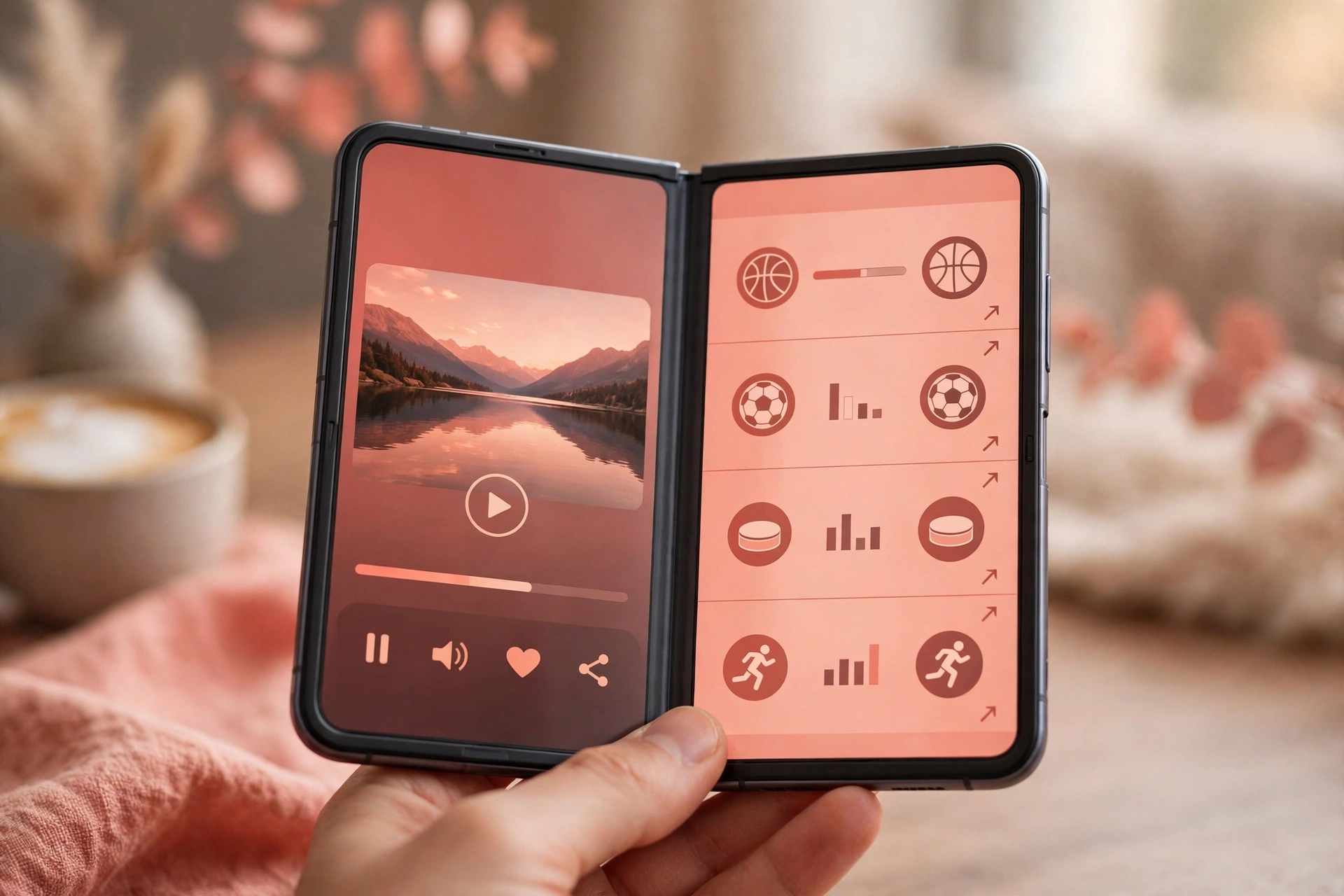


iPhone Duo Review Verdict: Brilliant Screen, Heavy Compromises
The first iPhone Duo review verdicts agree on the hardware highs and the first generation lows. The buying answer depends on how much you will actually use the big screen.
Apple’s first foldable iPhone reaches stores on Friday, October 23, and the first wave of iPhone Duo review coverage landed two days earlier, including The Strategist’s iPhone Duo review. The verdict pattern is unusually consistent across outlets. Reviewers praise the 7.6 inch inner display, its matte nano-texture finish and a hinge that feels properly engineered. They also flag the same list of compromises: a cramped 5.4 inch cover screen, no telephoto camera, no Face ID, noticeable weight and a starting price of $1,999 in the US and €2,299 in Germany.
At $1,999 (US) or €2,299 (Germany) for 256GB, the Duo costs $700 more than the iPhone 18 Pro Max in the US. Every iPhone Duo review is really answering one question: does the folding screen earn that premium in daily use, or is it an early adopter tax on a product that will be better next year?
The short answer, drawn from the iPhone Duo review consensus, is conditional. If you read, edit documents, watch video or run two apps side by side on your phone every day, the Duo offers something no regular iPhone can. If your phone life is mostly messaging, scrolling and photography, the iPhone 18 Pro and Pro Max do those jobs better for far less money.
In Brief
- Price: from $1,999 (US) and €2,299 (Germany) for 256GB, rising to $3,199 for 2TB
- Displays: 5.4 inch cover screen and 7.6 inch inner screen, both 120Hz, shared 1.4:1 aspect ratio
- Reviewers love: the matte inner display, the nearly hidden crease, the hinge, IP68 durability
- Reviewers flag: 254 gram weight, no telephoto camera, no Face ID, heat under load, unoptimized apps
- On sale October 23, with limited walk-in stock and orders capped at two per customer
iPhone Duo Review: The Inner Screen Is the Whole Argument
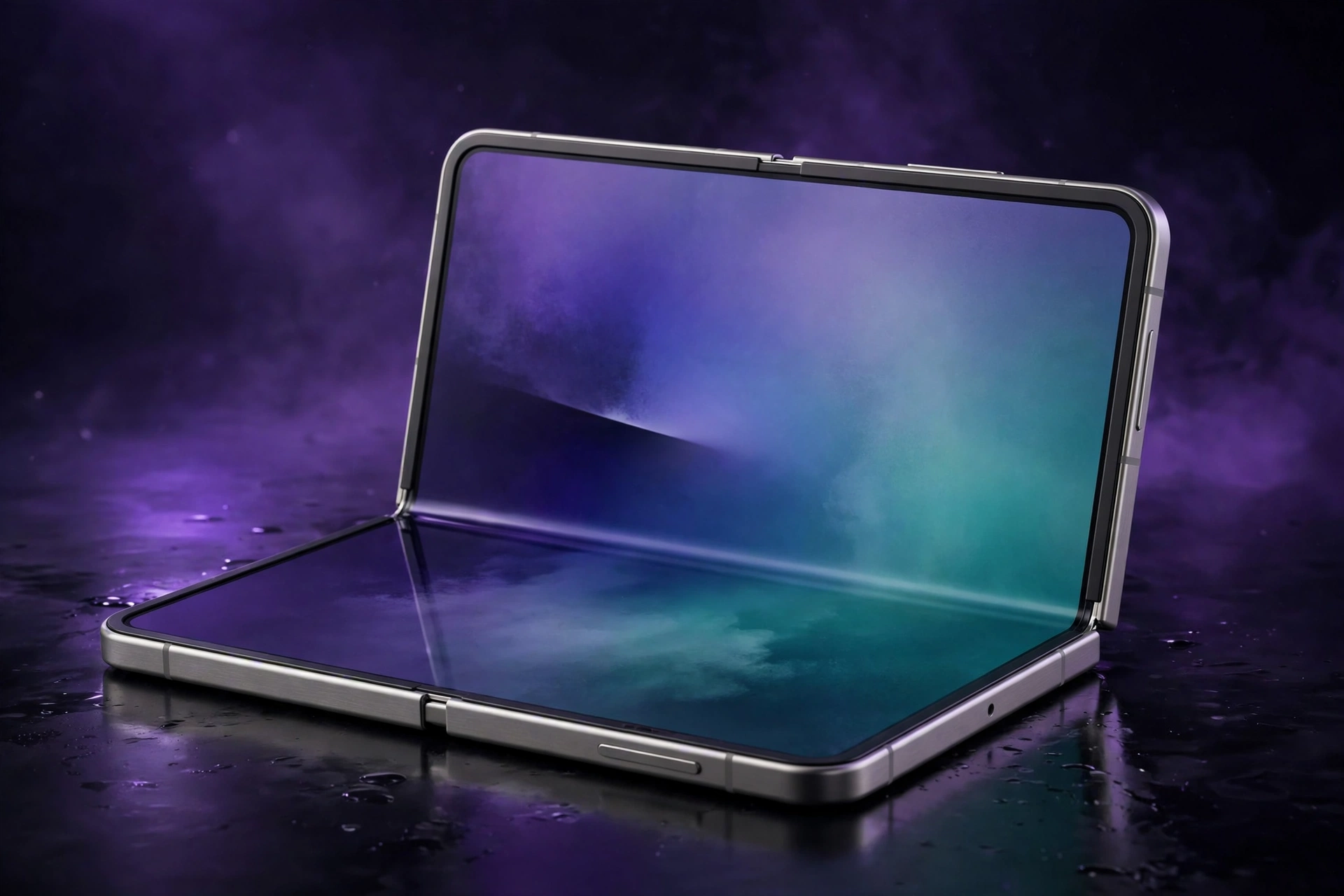
Every positive iPhone Duo review starts in the same place. The 7.6 inch inner display carries a nano-texture matte coating that diffuses reflections and, in practice, hides the center crease during normal use. Reviewers at The Verge said you mostly cannot see the crease, although you can still feel it under a thumb. Engadget’s iPhone Duo review scored the phone 8.8 out of 10 and called it a first class foldable, with the display and hinge at the center of that score.
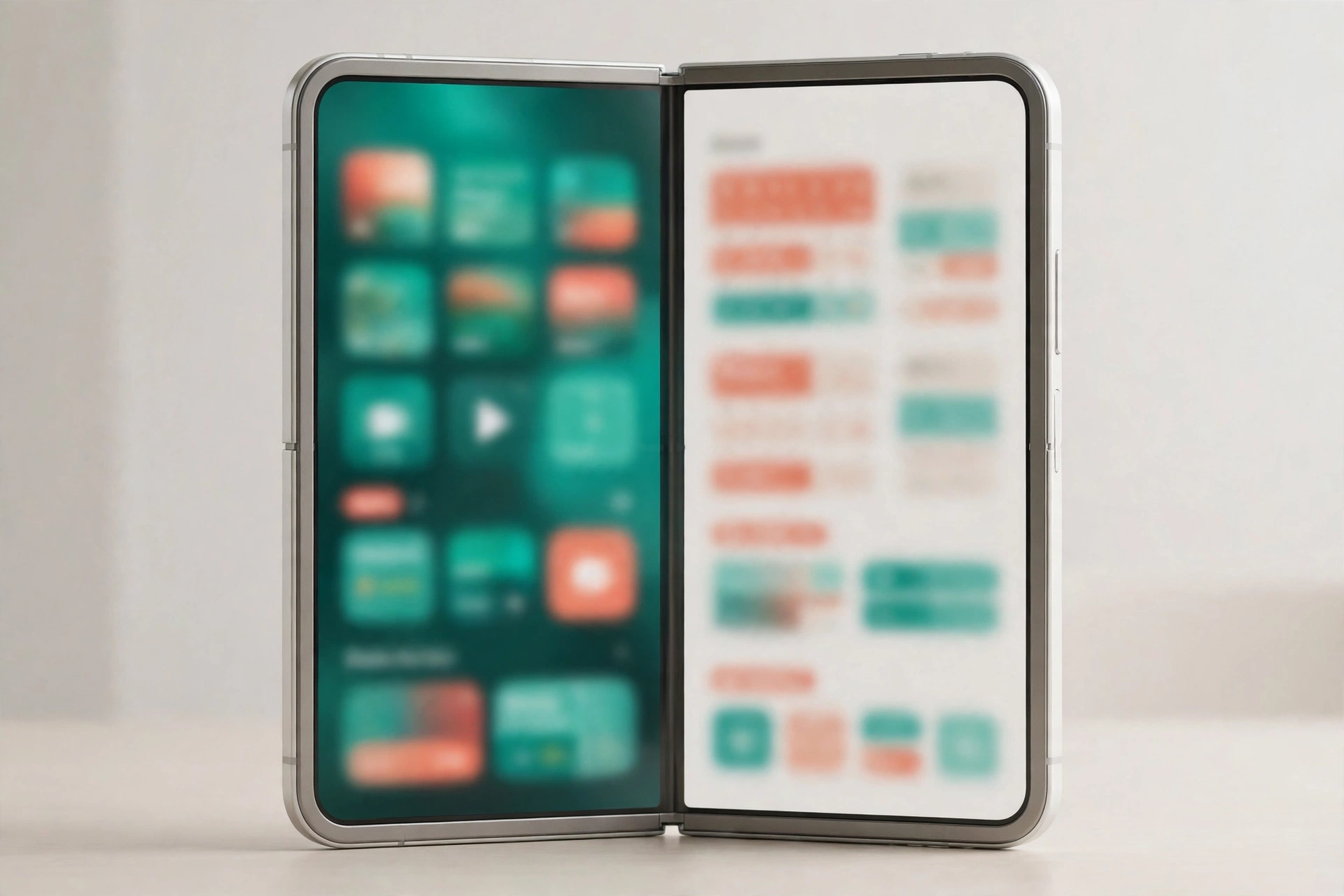
The size jump is real. Apple says the inner display is 50 percent larger than the screen on the iPhone 18 Pro Max, and because both displays share the same aspect ratio, apps move between them without awkward rescaling. Split View runs two apps side by side on an iPhone for the first time, and Netflix, Prime Video, Microsoft Word, Slack and Zoom all ship Duo layouts at launch.
The cover screen is where the praise stops. At 5.4 inches in a wide, short shape, it handles quick checks well, but reviewers found typing cramped, with only a few message threads visible at once. The design quietly pushes you to open the phone for anything longer than a glance, which is fine at a desk and less fine one handed on a train.
iPhone Duo Review: Where the Duo Genuinely Shines
Battery life surprised reviewers. Engadget recorded 28 hours and 48 minutes in its video rundown test, roughly half an hour longer than Samsung’s Galaxy Z Fold 8. Tom’s Guide measured 13 hours and 20 minutes of web surfing, again ahead of the Fold 8, though behind the iPhone 18 Pro Max at about 17.5 hours. Apple rates the phone at up to 31 hours of video on the inner display. The independent tests suggest endurance is not the weakness many predicted.
Durability is the other headline strength in this iPhone Duo review. The Duo is rated IP68, a higher rating than Samsung’s foldable carries, and it keeps MagSafe magnets that most foldables skip. One reviewer ran a Duo through more than 32,000 machine folds and reported a hinge that felt unchanged afterward. That is one unit over a few days, not a lifetime guarantee, but it is a reassuring early signal. Performance is not in doubt either: the A20 Pro matches the iPhone 18 Pro line, and reviewers found speed to spare for split screen work, games and video editing.
Cameras, Heat and the Weight Problem
The camera system is the clearest downgrade from the Pro line in this iPhone Duo review. The Duo carries a 48MP main camera and a 48MP ultra wide, with no telephoto lens at all. Reviewers found main camera output good but a step below the iPhone 18 Pro. Anyone who relies on optical zoom for family photos, travel or concerts gives up a weekly tool, an omission several reviewers called the compromise most likely to push buyers back to a Pro model.
Heat is the second recurring complaint. The Verge’s iPhone Duo review reported the phone getting warm and at times hot during video apps and long camera sessions, with throttling under sustained camera load. Other outlets noted warmth without the same severity, so the picture is mixed rather than settled. Heavy users should treat long 4K recording sessions and summer outdoor use as open questions until longer term testing arrives.
Weight ties the complaints together in every iPhone Duo review. At 254 grams, the Duo is more than 25 percent heavier than the Galaxy Z Fold 8. Reviewers called it noticeable in a pocket and tiring in one hand. Add Touch ID instead of Face ID and many third party apps still showing wasted space on the new shape, and the daily friction is real even when the headline features impress.
Price, Limits and Getting One
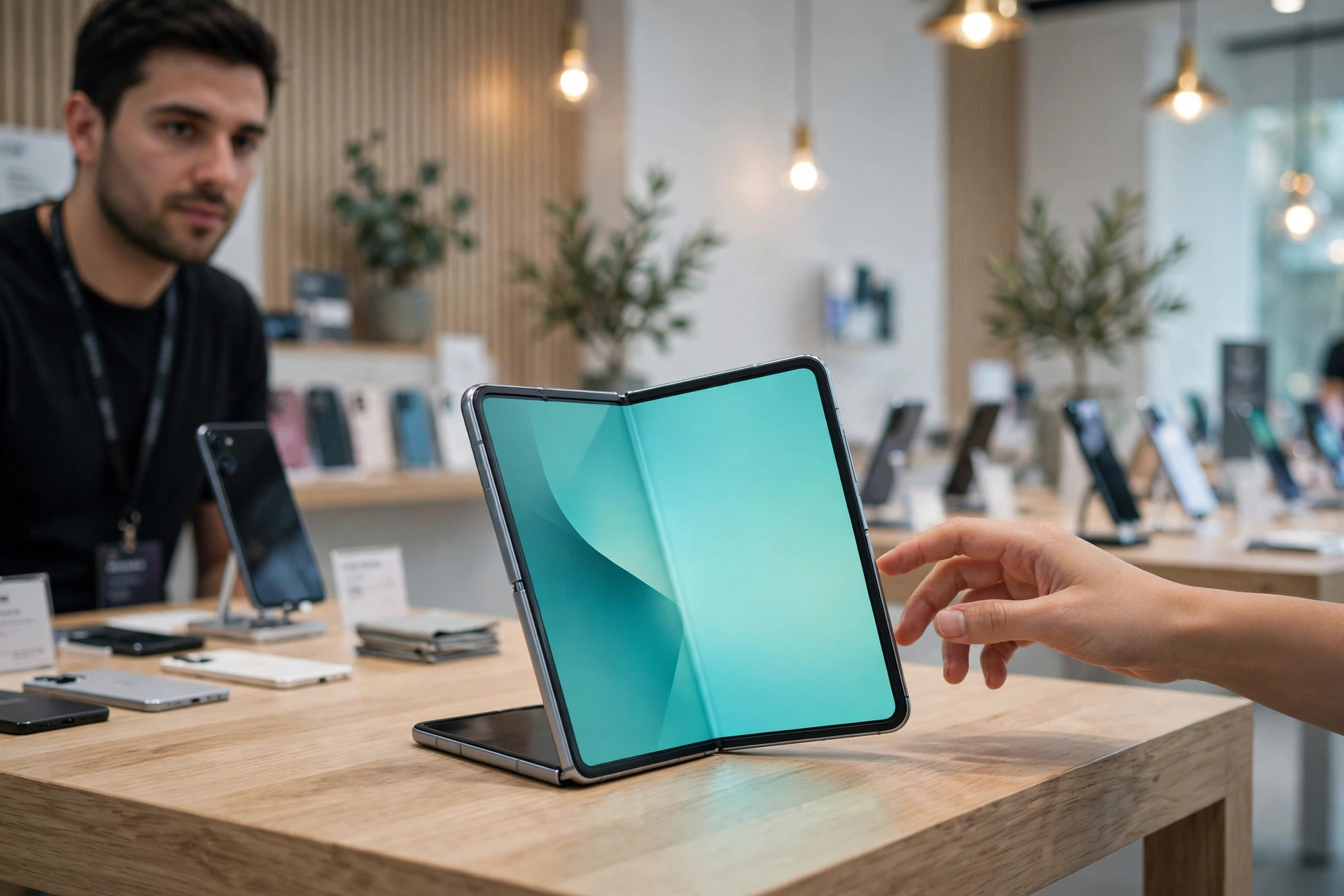
Supply is the other half of the launch story. Apple has capped orders at two units per customer, store staff have been told to expect little or no walk-in stock on October 23, and some online delivery estimates have slipped into January 2027. Resale listings above $5,000 appeared within days of pre-orders opening on October 16, which is part of why the purchase cap exists. Buyers in France, India, Japan and mainland China should expect pickup of online orders rather than casual walk-in sales at many stores.
Storage tiers soften nothing. The range runs from $1,999 for 256GB to $2,199 for 512GB, $2,599 for 1TB and $3,199 for 2TB in the US. Trade-in credit of up to $885 for recent iPhones and carrier deals help, but the Duo remains a considered purchase everywhere it sells, at €2,299 in Germany and €2,339 in France.
What to Watch Next
Three things will decide how this launch ages. First, app optimization: the pace of third party updates will show whether the inner screen becomes a daily tool or a novelty. Second, long term durability and heat data from owners, which no launch week review can settle. Third, the sequel is already taking shape. Bloomberg reporting via MacRumors says Apple is prototyping a second generation Duo with under-display Face ID, expected next fall. If Face ID matters to you, that roadmap is a genuine reason to wait.
Final Word
The iPhone Duo is the rare first generation Apple product that every iPhone Duo review calls messy and impressive in the same breath, and both labels fit. Buy it if the big matte screen changes what you do every day, if you live inside Apple’s ecosystem, and if $1,999 or €2,299 is a comfortable spend. Skip it if cameras, one handed comfort or battery life per dollar top your list, because the iPhone 18 Pro Max wins those contests for $700 less. For everyone in between, the sensible move is the one several reviewers landed on: try it in a store, then let the Duo 2 rumors and the app updates make next year’s decision easier.
Sources
The Strategist, iPhone Duo review, October 2026. Apple Newsroom, developers bring new app experiences to iPhone Duo, October 22, 2026. MacRumors, iPhone Duo 2 prototypes include under-display Face ID, October 22, 2026. Review roundups summarizing The Verge, Engadget, Tom’s Guide and CNET testing, October 21, 2026. MacObserver, iPhone Duo price by country, 2026.