 Grok AI-generated Odyssey arrived on October 23, 2026, as a seven-minute episode posted on X, three months after Elon Musk promised a full-length, historically accurate film of Homer’s epic before the end of the year. Built with xAI’s Grok Imagine tool with Wonder Studios and director Dev Walker, it is billed as Episode 1. It is not a finished movie, and the gap between promise and footage is the story.
The episode runs seven minutes and twelve seconds and was posted in 4K by the Grok Imagine account. Musk reposted it as “Odyssey with Grok Imagine,” and by Sunday afternoon the original post had passed 3.3 million views, according to coverage. It covers the Greeks arriving at Troy, a starting point that already bends the source, since Homer’s poem opens ten years after the war, with Odysseus still trying to get home.
That tension defines the release. Seven watchable minutes of an AI-staged epic is a real technical marker, because holding characters and tone together across minutes is hard for generative video. But seven minutes is far from a feature film, and the first major review found the footage plausible but dramatically empty. Judge it as a demonstration, not proof that AI can make a movie.
The Short Version
- The Grok AI-generated Odyssey episode landed on X on October 23, 2026, running seven minutes and twelve seconds.
- Made with Grok Imagine, in creative collaboration with Wonder Studios and director Dev Walker.
- Dialogue is in English, not ancient Greek, softening the original accuracy pitch.
- TechCrunch called the whole piece airless, with stilted dialogue and no momentum.
- No episode count, runtime, next-episode date, or plan beyond X has been announced.
Grok AI-generated Odyssey: What xAI Actually Released
The Grok AI-generated Odyssey post invited viewers to watch Episode 1 and ask in the comments for a full breakdown of how it was made. Wonder Studios promoted it with the line “Homer didn’t have Grok… we do.” The credit matters: this is a production between a model maker and a generative filmmaking studio, not one prompt typed into a consumer app.
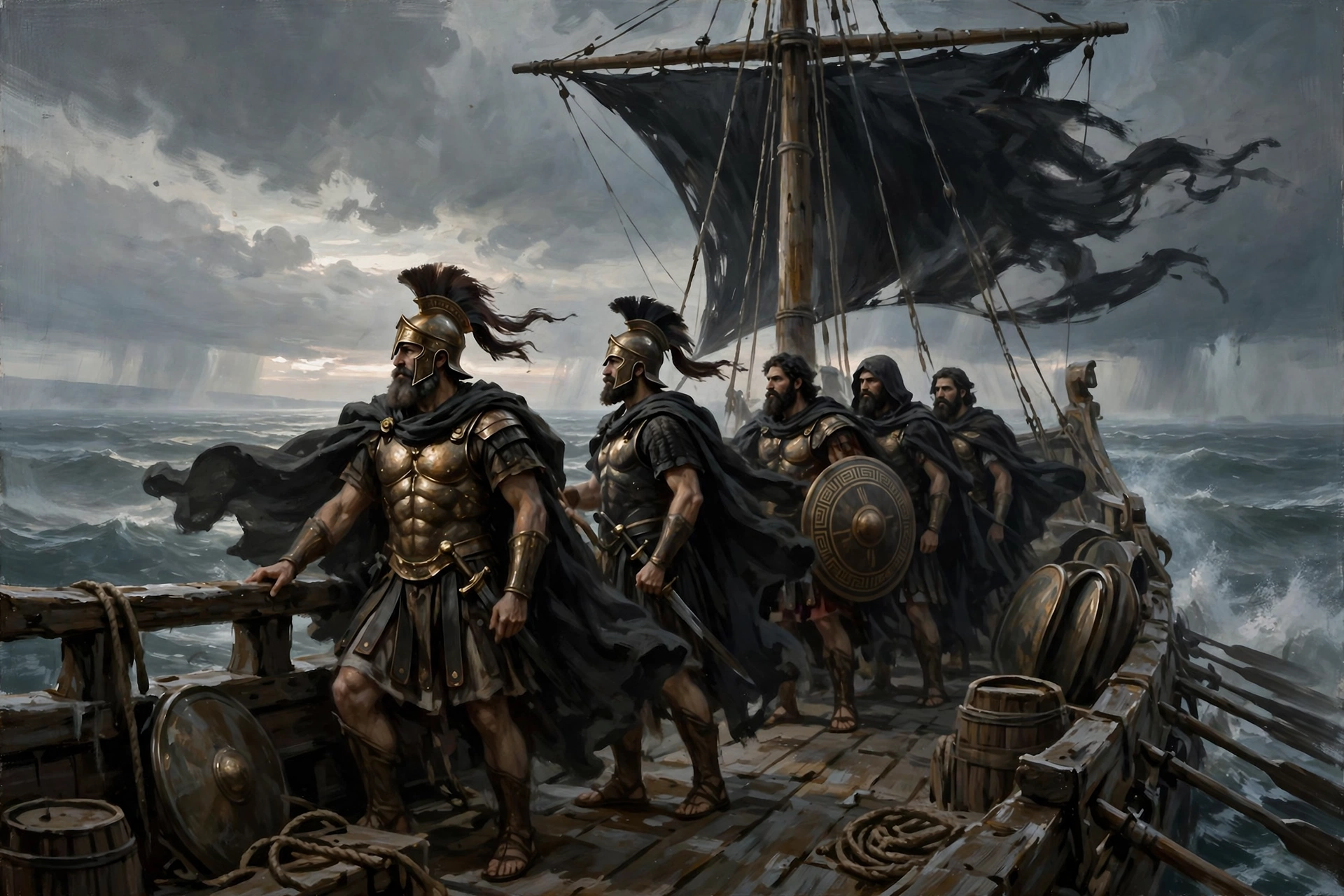
Reports describe a bearded lead in a dark cloak, a woman holding an infant, a carved horse figurine, and black-sailed ships on a grey sea. Other coverage describes Odysseus preparing for the expedition, Penelope urging him on, the fleet sailing for Troy, and Telemachus training. PetaTech24 has not verified each scene, so these are reported descriptions, not our viewing notes.
The production used Grok Imagine Video 1.5, according to coverage, a model that generates synchronised dialogue, sound and effects in a single pass. Earlier that week, the Grok Imagine account published a creator guide on gathering reference images, brainstorming a style, and applying it across characters and backgrounds. That workflow is the clearest hint at how the episode’s look stayed consistent.
Scrutiny came fast. Viewers flagged the all-white cast, and coverage noted AI artifacts, the glitches that reveal machine-made footage. TechCrunch noted the characters arrive in a Musk-approved skin color while the narrator uses a familiar British accent. xAI has not explained the casting, so whether it was a choice or a tool default is unknown.

Why the Nolan Comparison Matters
The Grok AI-generated Odyssey project did not arrive in a vacuum. Musk’s July pledge followed months of criticism of Christopher Nolan’s film version, much of it aimed at the casting, including Lupita Nyong’o as Helen and Elliot Page as Sinon. In February, Musk posted that Nolan had lost his integrity over the casting. The AI film was framed from the start as a rival answer to a human-made epic, not just a tech demo.
Nolan’s film is a feat of practical filmmaking, according to TechCrunch, shot across six countries with a cast and crew of thousands. Released in July, it became a box office success, sold out Imax screenings for months, and became the likely Academy Awards front-runner, with reported grosses above $1.7 billion. Thousands of people versus a small generative team is the real comparison.
Nolan has been openly skeptical of generative AI. He calls himself a techno-skeptic, has said that before AI he never saw a technology so completely rejected by the public, and told AFP that AI replacing human creativity was nonsense, according to coverage. He is a natural foil for Musk, who posts a constant stream of AI content.
What the First Seven Minutes Show, and What They Do Not
TechCrunch weekend editor Anthony Ha watched the full episode; his review of the Grok AI-generated Odyssey episode is the most detailed public account of it. He found it less ugly than expected, with shots that might pass for real actors sailing a real sea. That concession is the strongest evidence yet that generative video has reached a new level of surface realism.
His overall verdict was blunt. The voiceover backstory drags, then one bearded face after another shouts stilted lines. He called the clip completely airless, with no momentum and no reason to care about anyone on screen, and wrote that he was checking the remaining time before it was halfway through. If it were a game cutscene, he would have hit skip.
That review leaves key questions open for the Grok AI-generated Odyssey footage. Ha said he could not speak to its historical accuracy, so that claim remains untested. xAI has not named the model version used or disclosed the production cost. The published API price for Grok Imagine Video 1.5 starts at $0.08 per second at 480p, but that is an API rate, not this production’s cost.

The Bigger Picture
The Grok AI-generated Odyssey release matters beyond one episode because it tests the core pitch of generative filmmaking: a small team with the right tools attempting an epic that once needed a backlot. Wonder Studios, founded by Xavier Collins and Justin Hackney, raised $12 million in seed funding led by Atomico in October 2025 and has worked for YouTube, the BBC, Google DeepMind and Universal Music Group.
The pitch strains where storytelling begins. Consistency across minutes is an achievement, and the episode shows progress there. But dialogue, pacing, character and meaning still come from human choices, and the first review found those choices missing. If later episodes improve the writing rather than only the polish, the Grok AI-generated Odyssey project could grow into something worth watching.
A wider question sharpens too. A studio using reference images and style guides is doing creative work, yet the output still carries the model’s defaults, from casting patterns to artifacts. Audiences, actors and regulators will keep pressing on who deserves credit and what “historically accurate” can mean when a machine invents the past in fluent English.
Quick Answers
Is the Grok AI-generated Odyssey a full movie? No. What arrived on October 23 is Episode 1, seven minutes and twelve seconds long. A full-length film was promised before the end of 2026, but none has been released.
Is it historically accurate? Unproven. Dialogue is in English, not ancient Greek, and it opens with the Greeks reaching Troy, while Homer’s poem opens a decade after the war.
Where can viewers watch it? The Grok Imagine account posted it on X, where it passed 3.3 million views by Sunday afternoon. No cinema, streaming or television plan has been announced.
When does Episode 2 arrive? That is unannounced. The release post invited viewers to ask for a breakdown of how Episode 1 was made, but gave no date for the next episode or the film.
Grok AI-generated Odyssey: What Happens Next
The next test for the Grok AI-generated Odyssey project is simple: does Episode 2 arrive, and does it improve where Episode 1 was weakest? Watch for the promised breakdown of how Episode 1 was made, and for an episode count or total runtime, which would turn an open-ended series into a real production plan.
The harder test is the calendar for the Grok AI-generated Odyssey. The pledge points to a full-length film before the end of 2026, leaving roughly two months from October 23. If the project stays at one episode, the pledge will read as a demo dressed as a promise. If episodes land quickly and the writing sharpens, the debate will shift from staging an epic to sustaining one.
The Takeaway
Seven minutes prove AI video can dress an ancient epic in convincing images, not that it can tell the story, hold attention, or keep a July promise. The Grok AI-generated Odyssey episode is best read as a progress report: the pictures have arrived, the film has not, and the clock is running. Judge the next episode by its writing, not only by how real its sea looks.
Sources and Attribution
- TechCrunch, Anthony Ha, “Grok releases the first seven minutes of its AI-generated Odyssey,” October 25, 2026 (updated October 26, 2026): TechCrunch report.
- Grok Imagine account on X, “Episode 1 of our Odyssey series,” October 23, 2026, creative collaboration with Wonder Studios and director Dev Walker.
- t2online, “Musk’s xAI releases first episode of AI-made Odyssey,” October 2026: t2online report.
- Crypto Briefing, “Musk’s Grok releases first seven minutes of AI-generated Odyssey series,” October 2026: Crypto Briefing report.
- MadRobot, “Musk’s Grok AI Odyssey movie: Episode 1 runs seven minutes,” October 25, 2026: MadRobot report.
- LatestLY, “Grok Imagine Releases First 7 Mins of AI-Generated Odyssey,” October 2026: LatestLY report.
- TeslaNorth, “Elon Musk Shares Episode 1 of Grok Imagine’s AI-Made Odyssey Series,” October 25, 2026: TeslaNorth report.
- Startup Fortune, “Grok Releases Seven Minutes of Its AI-Made Odyssey Series,” October 2026: Startup Fortune report.