
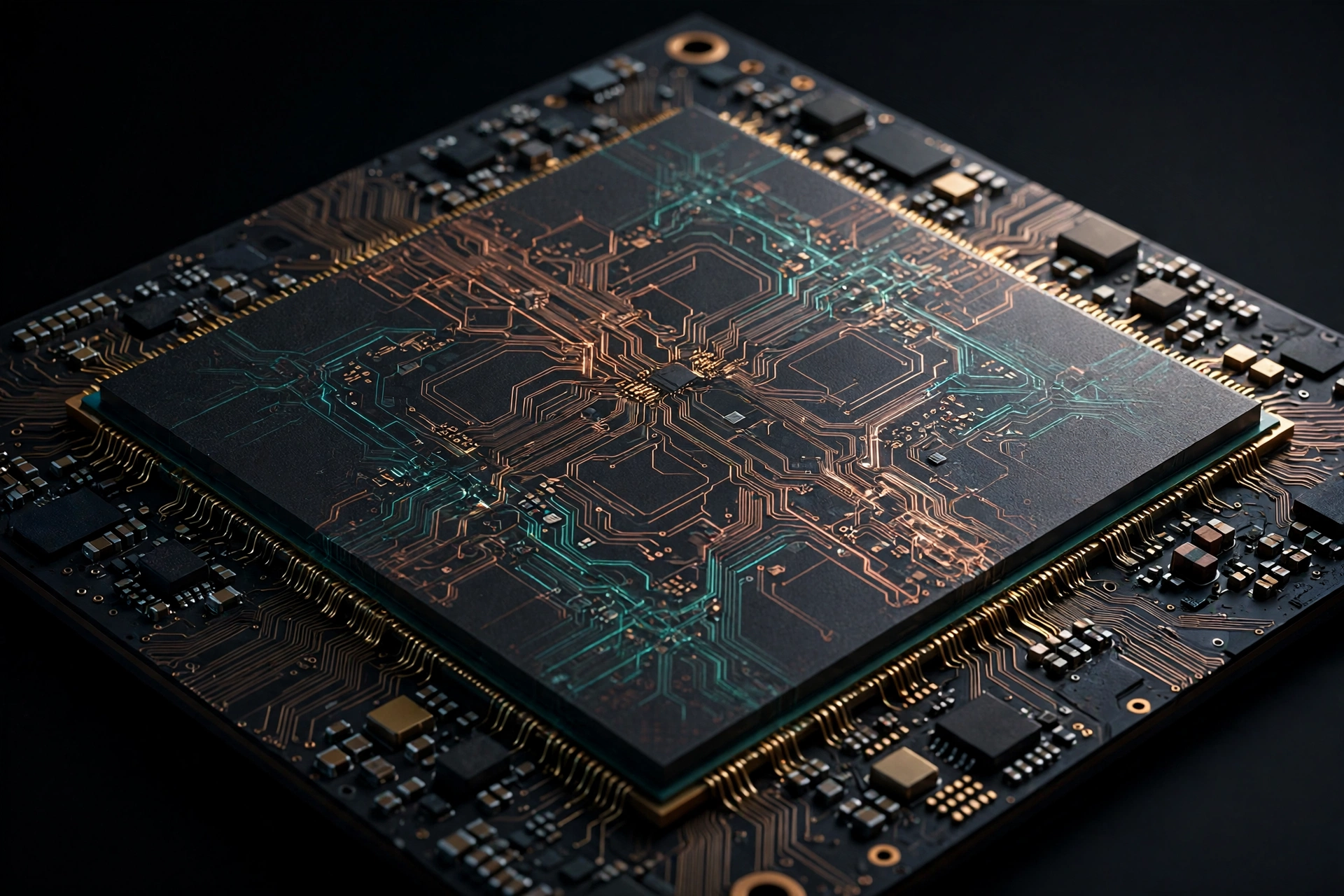
The Snapdragon 8 Elite Extreme Gen 6 is Qualcomm’s flagship phone chip for the 2026 cycle, announced on September 22, 2026, and built on a 2-nanometer TSMC process. It keeps the same CPU clocks as the regular Snapdragon 8 Elite Gen 6 and spends its extra headroom on graphics, memory and connectivity.
NanoReview, which pools crowd-submitted results into an aggregate score, rates the chip at 98 overall, with 99 for CPU performance, 100 for gaming and 93 for battery life. Those figures are a useful starting point, not a verdict, because no controlled same-chassis test puts this chip against its rivals in identical hardware.
Key Takeaways
- The Snapdragon 8 Elite Extreme Gen 6 pairs an 8-core CPU at up to 5.01 GHz with an Adreno 850 GPU at 1,450 MHz on a 2nm TSMC process.
- NanoReview’s aggregate, tagged (CR) in this article, gives AnTuTu 11 of 5,195,978, Geekbench 6 single-core of 4,327 and multi-core of 12,873, and 3DMark Solar Bay of 18,485.
- Against the regular Gen 6, the Snapdragon 8 Elite Extreme Gen 6 changes the GPU, moves to LPDDR6 memory, and adds Wi-Fi 8 and Bluetooth 6.3, while the CPU clocks and X105 modem stay the same.
- Eight phones appear in NanoReview’s listing, led by the Honor Magic 9 Pro Max at 5,524,187 on AnTuTu 11.
- Battery life stays a property of each phone. No identical-condition battery duel was found, so this profile does not name a chip winner on battery.
Why You Should Care
The Snapdragon 8 Elite Extreme Gen 6 matters because it defines the ceiling for Android flagship phones in late 2026. Phones built around it are the ones buyers will compare when they ask whether a new flagship is worth its price, especially for demanding games, on-device AI work and long software support windows. A move to 2nm does not guarantee longer battery life or cooler running on its own, since cooling, software tuning and the phone around the chip decide much of the daily experience.
For buyers, the Snapdragon 8 Elite Extreme Gen 6 is also a naming warning. The Extreme name sits close to the regular Gen 6 name, and the two chips share CPU clocks. Buyers who want the graphics and memory changes described here should check the exact chip name on the spec sheet before they pay.
Testing note: No published same-chassis lab test exists; treat phone scores as orientation only. Results below come from different retail phones tested by different outlets at different times, or from NanoReview’s crowd aggregate. They are useful for ballpark comparison, not a controlled duel.
Snapdragon 8 Elite Extreme Gen 6 Specs: CPU, GPU and Memory
The Snapdragon 8 Elite Extreme Gen 6 is an 8-core design: two cores at 5.01 GHz, three at 4.03 GHz and three at 3.74 GHz. It uses the ARMv9.4-A instruction set, with 192 KB of L1 cache and 16 MB of L2 cache.
| Detail | Extreme Gen 6 |
|---|---|
| CPU | 8 cores: 2x 5.01 GHz, 3x 4.03 GHz, 3x 3.74 GHz |
| Process | 2nm, TSMC |
| Instruction set | ARMv9.4-A |
| L2 cache | 16 MB |
| GPU | Adreno 850, 1,450 MHz, 1,536 shaders |
| GPU compute | 4,454.4 GFLOPS |
| NPU | Hexagon, no TOPS figure listed |
| Memory | LPDDR6, 5,300 MHz, up to 24 GB |
| Storage | UFS 4.1, UFS 5.0 |
| Max display | 3,840 x 2,540 |
| Video | 8K at 60fps, 4K at 120fps |
| Modem | Qualcomm X105, Wi-Fi 8, Bluetooth 6.3 |
The Snapdragon 8 Elite Extreme Gen 6 graphics block is where the specification sheet gets specific. The Adreno 850 runs at 1,450 MHz with three pipelines and 1,536 total shaders, and NanoReview lists 4,454.4 GFLOPS of compute, plus Vulkan 1.4, OpenCL 3.0 and DirectX 12.1 support.
LPDDR6 memory at 5,300 MHz supports up to 24 GB, storage runs to UFS 5.0, and video capture and playback both reach 8K at 60fps and 4K at 120fps. NanoReview lists a Hexagon neural processor but gives no TOPS figure for it, so this profile does not invent one.
Snapdragon 8 Elite Extreme Gen 6 Benchmarks in Detail
The Snapdragon 8 Elite Extreme Gen 6 headline numbers come from NanoReview’s aggregate, tagged (CR) for crowd aggregate throughout this article. AnTuTu figures are version 11 only, Geekbench figures are version 6 only, and each 3DMark test is named separately, so no version is mixed with another in a single column. User-submitted entries on the same NanoReview page were excluded: several use AnTuTu 12, and the same result figure appears under different dates and names.
| Test (CR) | Score |
|---|---|
| AnTuTu 11 total | 5,195,978 |
| AnTuTu 11 CPU | 1,407,243 |
| AnTuTu 11 GPU | 1,940,214 |
| AnTuTu 11 Memory | 739,539 |
| AnTuTu 11 UX | 1,108,982 |
| Geekbench 6 single-core | 4,327 |
| Geekbench 6 multi-core | 12,873 |
| Geekbench 6 compute (GPU) | 35,781 |
| 3DMark Steel Nomad Light | 4,310 |
| 3DMark Solar Bay | 18,485 |
CPU performance
On CPU work, the Snapdragon 8 Elite Extreme Gen 6 aggregate gap to the regular Gen 6 is narrow. Single-core of 4,327 sits about 0.6% above the regular chip’s 4,301, and multi-core of 12,873 sits about 3.1% above its 12,490. Everyday responsiveness is unlikely to feel different between the two chips on that evidence alone.
GPU and gaming
In graphics, the Snapdragon 8 Elite Extreme Gen 6 shows a wider gap. Its AnTuTu 11 GPU subscore of 1,940,214 sits about 14% above the regular chip’s 1,707,388, and its Geekbench 6 compute score of 35,781 sits about 12% above the regular chip’s 31,982. Solar Bay at 18,485 and Steel Nomad Light at 4,310 point the same way for ray tracing and sustained graphics work.
Remember that real-world sustained performance depends on each phone’s cooling design, software tuning and ambient temperature as much as on the chip itself. A thicker phone with a better vapour chamber can outperform a thinner phone running the same silicon.

Extreme Gen 6 vs Regular Gen 6
The comparison that matters most is inside Qualcomm’s own lineup. The Extreme variant and the regular Gen 6 share an announcement date, process node, CPU clocks, modem and bandwidth figure. The differences sit in graphics, memory and wireless standards, not in the CPU layout.
| Feature | Extreme Gen 6 | Regular Gen 6 |
|---|---|---|
| GPU | Adreno 850 | Adreno 845 |
| GPU frequency | 1,450 MHz | Not listed by NanoReview |
| Memory type | LPDDR6 | LPDDR5X |
| Wi-Fi | Wi-Fi 8 | Wi-Fi 7 |
| Bluetooth | 6.3 | 6.2 |
| CPU clocks | Same | Same |
| Modem | X105 | X105 |
| AnTuTu 11 total (CR) | 5,195,978 | 4,945,385 |
| Geekbench 6 compute (CR) | 35,781 | 31,982 |
Benchmark figures in this table are NanoReview aggregates (CR), AnTuTu 11 and Geekbench 6 only. The pattern is clear, and it is not a clean sweep: the total AnTuTu 11 gap is about 5%, driven by graphics, while the memory subscore runs the other way, at 739,539 against 746,934 for the regular chip, about 1% lower. The Snapdragon 8 Elite Extreme Gen 6 is a graphics and memory refresh of the regular Gen 6, not a new CPU, and buyers upgrading for CPU speed alone will find little reason to move.
Battery: Phone Property, Not Chip Property
Battery life is where chip profiles most often mislead, and the Snapdragon 8 Elite Extreme Gen 6 is no exception. NanoReview’s battery figure of 93 is an efficiency composite in its own scoring system, not a measured number of hours, and it does not come from a single phone tested under controlled conditions. Phone evidence shows why the distinction matters: the OnePlus 16, identified in PetaTech24’s poll coverage as a phone using this chip, pairs it with a 9,000mAh battery and 100W charging, and that endurance story belongs to the phone, not to the chip alone.
No identical-condition battery duel was found across the reviewed phones. Treat battery life and charging speed as properties of the specific phone (its battery size, software, screen and charger), not of the chip. Do not pick a chip winner on battery.
Connectivity in Practice
The Snapdragon 8 Elite Extreme Gen 6 pairs the X105 modem with listed maximum download speeds of up to 14,800 Mbps and upload speeds of up to 4,200 Mbps. Those are listed maximums from the specification listing, not measured speeds on a live network, and real speeds depend on the carrier, the plan, signal strength and the phone’s antenna design.
Wi-Fi 8 and Bluetooth 6.3 help only with matching equipment: a Wi-Fi 8 router and compatible accessories. Most buyers in Bangladesh, South Asia and much of Europe, on sub-6GHz 5G or LTE plans, will see no daily benefit from extra modem headroom alone. The newer standards are future-proofing, not a speed gain on today’s networks.
Phones That Use the Chip
NanoReview lists eight phones with the Snapdragon 8 Elite Extreme Gen 6, each with an AnTuTu 11 aggregate figure (CR). The order below follows NanoReview’s listing, and the figures come from different phones in different conditions, so they are orientation only, not a controlled ranking by PetaTech24.
- Honor Magic 9 Pro Max: 5,524,187
- vivo iQOO 16: 5,498,720
- Motorola Signature 27: 5,153,294
- Xiaomi 18 Pro Max: 5,001,234
- Honor Win 2: 4,761,285
- ZTE Nubia Red Magic 12 Pro: 4,701,314
- OnePlus 16: 4,627,389
- ZTE Nubia Red Magic 12 Pro Plus: 4,541,625
Availability varies sharply by phone and market. The OnePlus 16 is a China-only phone in PetaTech24’s poll coverage, with India described as disputed, and no official US or Europe launch. Buyers of a Snapdragon 8 Elite Extreme Gen 6 phone should confirm the exact model, chip name and regional variant before buying, and should not assume every phone in this list is sold in their market.
Snapdragon 8 Elite Extreme Gen 6: Who Should Care, and Who Should Wait
The Snapdragon 8 Elite Extreme Gen 6 is the right headline for buyers who keep a flagship for years and play demanding games. For everyone else, the phone around the chip, its price, cameras, battery size and software support, will decide the purchase more than the chip name.
Pick a phone with this chip if
- You want a phone built around the Snapdragon 8 Elite Extreme Gen 6 for sustained gaming, and you will use the graphics headroom its aggregate scores suggest.
- You plan to keep the phone for several years and value Wi-Fi 8 and Bluetooth 6.3 as future-proofing for routers and accessories you will buy later.
- You already want a specific phone in the list above for its screen, cameras or battery, and the chip confirms it sits at the top of the Android range.
Look elsewhere if
- Battery life is your top priority, and another phone offers a larger battery and better reviewer endurance results in your price range.
- You mainly browse, message, stream and take casual photos, where the CPU gap to cheaper flagship chips is too small to feel in daily use.
- The only phone with this chip in your market costs far more than a phone with the regular Gen 6 and the same screen and cameras.
At the same price, prefer the better phone overall: the better screen, cameras, battery size, software support and condition of the specific unit. Do not over-index on specs. A 5% to 10% benchmark gap matters less than the display you look at, the cameras you use and the battery you charge every day.

FAQ
What is the Snapdragon 8 Elite Extreme Gen 6?
It is Qualcomm’s flagship Android phone chip for the 2026 cycle, announced on September 22, 2026, on a 2nm TSMC process. The Snapdragon 8 Elite Extreme Gen 6 has eight CPU cores, an Adreno 850 GPU, LPDDR6 memory and an X105 modem.
How is it different from the regular Snapdragon 8 Elite Gen 6?
The GPU changes from Adreno 845 to Adreno 850, memory moves from LPDDR5X to LPDDR6, and wireless moves to Wi-Fi 8 and Bluetooth 6.3. The CPU clocks, modem and listed bandwidth figure stay the same, and the AnTuTu 11 gap is about 5%, driven mainly by graphics.
Which phones use it?
NanoReview lists eight phones with the Snapdragon 8 Elite Extreme Gen 6, led by the Honor Magic 9 Pro Max, vivo iQOO 16, Motorola Signature 27 and Xiaomi 18 Pro Max, plus the OnePlus 16 and two Red Magic models. Availability varies by market.
Is it the fastest Android chip?
NanoReview’s aggregate gives it the top gaming score on its own scale, at 100, with an overall score of 98. That is aggregate evidence, not a controlled lab duel in identical phones, so this profile does not declare it the universal winner.
Final Word
The graphics upgrade is real. The CPU story is continuity. Battery stays phone-dependent.
If you buy a flagship for gaming and keep it for years, a phone with the Snapdragon 8 Elite Extreme Gen 6 inside is a sound shortlist choice. If your priority is battery life or value, judge the phone, not the chip name, and compare whole phones at the price you will actually pay.
Check the exact chip name on the spec sheet. Extreme and regular Gen 6 share CPU clocks, and the difference lives in graphics, memory and connectivity. That check takes a minute, and it prevents paying an Extreme price for a regular chip.
Sources
- NanoReview, Qualcomm Snapdragon 8 Elite Extreme Gen 6: specs and benchmarks, accessed October 27, 2026
- NanoReview, Qualcomm Snapdragon 8 Elite Gen 6: specs and benchmarks, accessed October 27, 2026
- PetaTech24, OnePlus 16 Poll: 5 Proven Reasons Readers Wanted It, October 27, 2026
Score methodology: Lab-reviewer (LR) scores come from named outlets’ controlled testing. Crowd (CR) scores come from aggregator databases such as NanoReview, which pool user-submitted results and are less controlled. Company (MF) numbers are manufacturer claims. This article uses (CR) scores only and treats them as directional. PetaTech24 did not test this chip.