
PC Shipments Fell by a Fifth in Q3 2026, and the RAM Shortage Is Why
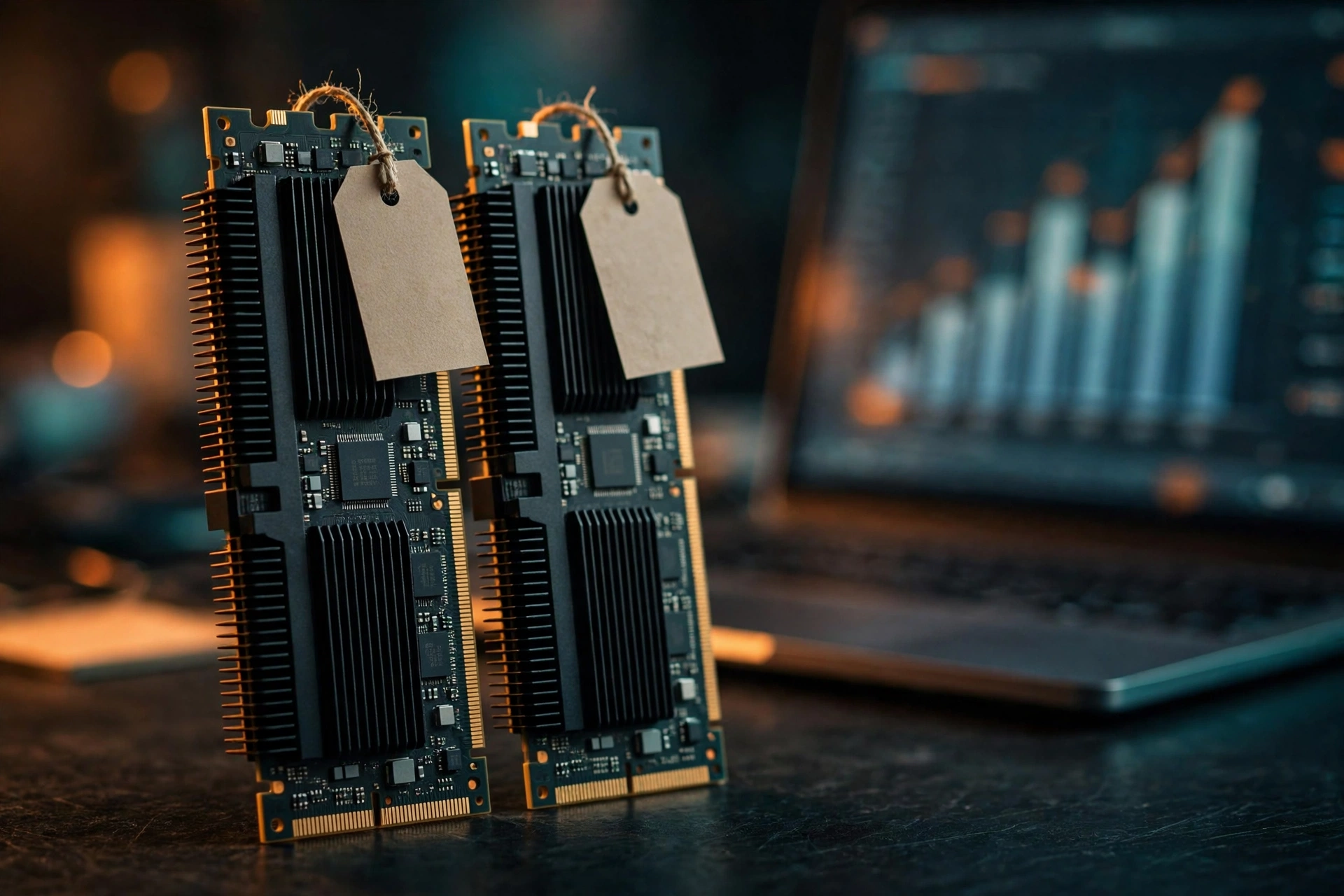
The global PC market just posted one of its worst quarters on record. Worldwide shipments fell between 20% and 22% in the third quarter of 2026, depending on the analyst firm. The cause was not collapsing demand for computers. It was a RAM shortage: AI data centers now buy the memory inside PCs first, in far larger quantities, and at prices PC makers cannot match.
Memory and storage that once accounted for about 15% of a PC’s component cost now account for nearly 40%, according to Omdia. Vendors passed the increase on to buyers, cheap models disappeared from shelves, and millions of buyers decided their current machines could last another year.
This is how a RAM shortage built for AI servers emptied the budget end of the PC market, and what buyers should do while it lasts.
The Short Version
- PC shipments fell about 20% to 22% year over year in Q3 2026, the steepest drop since the post-pandemic slump.
- The driver is the RAM shortage: DRAM and SSD capacity is being redirected to AI data centers, and prices have risen more than fourfold in a year.
- A 32GB DDR5 kit that cost about $95 in the US in 2025 now sells for $429 to $450; European listings start around €309.
- Gartner, TrendForce and Counterpoint see no meaningful price relief before late 2027.
- Need a PC now? Waiting will likely cost more. Machine still works? Patience is cheaper.
A Quarter That Broke the Seasonal Pattern
The three big tracking firms disagree on the exact total, but tell the same story. IDC counted 62.7 million PCs shipped in Q3 2026, down 20.1% year over year. Omdia put the figure at 58.1 million, down 21.2%. Gartner reported 55.4 million units, down 22.4%, back to levels last seen in early 2023. The Verge tied the drop directly to the RAM shortage.
Stranger than the annual drop was the sequence. Third quarters normally beat second quarters, thanks to back-to-school and holiday sales. This year IDC recorded a 9.1% fall from Q2 instead. IDC research director Jitesh Ubrani blamed a strong first-half pull-in, saying it “has thrown off the usual seasonality” of the market. Buyers who feared price rises ordered early in 2026, borrowing demand from Q3. The comparison base did not help: Q3 2025 was unusually strong, lifted by purchases ahead of the Windows 10 support deadline.
How the RAM Shortage Starts With AI Servers
The same wafer pool serves everyone. Those wafers become either the DDR5 sticks in a laptop or the high-bandwidth memory, HBM, stacked beside AI accelerators. Every wafer sent down the HBM line never reaches a PC, and HBM is hungry: according to Tom’s Hardware reporting, one gigabyte of HBM consumes roughly three times the wafer area of standard DDR5. Capacity shifted to AI subtracts from PC supply roughly three for one.
The money points the same way. Samsung, SK Hynix and Micron, which together produce over 95% of the world’s DRAM, earn far higher margins on HBM and server DDR5 than on laptop memory. AI companies also buy supply years ahead. The three makers did the rational thing and reallocated. Micron went furthest in public, discontinuing its Crucial consumer brand in late 2025 to focus on data centers.
The contract data is stark. TrendForce recorded PC DRAM contract prices rising 105% to 110% in the first quarter of 2026 alone, and projects a further 13% to 18% increase in the fourth quarter. Gartner’s Namrata Banerjee noted that DRAM costs “surged five times year-over-year” in the second quarter. NAND storage followed the same path, as enterprise SSD demand pulled capacity toward servers too.
How the RAM Shortage Empties Store Shelves
PC makers had three options once memory quadrupled: raise prices, cut specifications, or ship fewer machines. In Q3 they did all three. Gartner expects the average PC price to end 2026 about 17% higher than in 2025, with memory rising from 16% to 23% of a typical bill of materials. UK retail trackers watched one mainstream 32GB DDR5 kit climb from £79 in September 2025 to £422 by mid-October 2026.
Vendors also steered scarce components toward expensive configurations that can absorb the cost, a shift Gartner and Counterpoint both flagged. Entry-level models thinned out, and some manufacturers revived DDR4-based designs and graphics cards with 4GB of memory to hold headline prices down, according to Counterpoint. Businesses kept buying, but narrowly: fleet replacements and workstations, not broad refreshes. Consumers, facing laptops priced a fifth higher than last year, mostly stayed home.

Why You Should Care
Even if you never open a PC case, this RAM shortage reaches you. The laptop you planned to replace carries the same memory bill as a gaming rig, which is why its price climbed while its specs barely moved. Phones use the same DRAM supply, and Gartner expects smartphone prices to finish 2026 about 13% higher than 2025.
One strange consolation for existing owners: the RAM inside your machine has appreciated like a collectible. A kit bought for about $95 in 2025 can now be worth several times that at resale, which changes the repair-versus-replace math. Keeping an older PC alive suddenly counts as financial literacy.
Buy Now, or Wait It Out?
The analyst consensus is unusually blunt: this does not fix itself soon. TrendForce expects contract prices to keep rising into 2027. Gartner sees no meaningful relief before late 2027, and SK Hynix’s chief executive has called 2027 the worst shortage year yet. New fabs take years to build, and one major expansion, Nanya’s Fab 5A, will not reach volume production until 2028. Long-term contracts have also locked today’s high prices into the supply chain, limiting how fast prices could fall even if AI demand cooled.
So the advice splits by need. If your PC is failing, buying in the next few weeks likely beats buying next quarter, with Q4 contract increases still reaching retail. If your machine still works, waiting is rational, but be clear-eyed: you are waiting for late 2027 or 2028 pricing, not a sale next month.
What to Watch Next
- Fourth-quarter contract prices: TrendForce projects PC DRAM up another 13% to 18%, feeding retail prices in early 2027.
- Holiday pricing: whether vendors discount around component costs, or hold prices and accept a weak quarter. Counterpoint forecasts a 27% shipment decline for Q4.
- Capacity signals: any HBM slowdown, new fab timeline, or shift in AI spending would change the RAM shortage outlook fastest.
- The DDR4 revival: if older-memory designs keep multiplying, vendors admit the shortage defines their 2027 lineups too.
FAQ
Why did PC shipments fall if people still need computers?
Because computers got much more expensive, fast. Memory and storage rose from about 15% to nearly 40% of a PC’s component cost within a year, vendors passed that on, and buyers delayed replacements. Many also bought early in 2026, borrowing demand from Q3.
How much has RAM actually gone up?
At chip level, DDR5 went from $6.84 per GB in September 2025 to $27.20 per GB by December 2025, per TrendForce figures. At retail, a mainstream 32GB DDR5-6000 kit costs about $429 to $450 in the US as of mid-October 2026, four to five times its 2025 price, with European kits from around €309.
When will the RAM shortage ease?
No major analyst expects a meaningful decline in 2026 or most of 2027. Gartner points to late 2027 at the earliest, SK Hynix expects 2027 to be the tightest year, and new fab capacity mostly arrives in 2028.
Is DDR4 a safe way around the shortage?
Partly. Finished DDR4 kits still sell for less per gigabyte than DDR5 at retail, and some makers ship new DDR4 designs to hold prices down. But DDR4 production is winding down, its spot prices have set records too, and choosing it means an older platform.
Sources
- IDC, worldwide PC shipments for Q3 2026, reported October 8, 2026.
- Gartner, preliminary worldwide PC shipment results for Q3 2026, October 12, 2026.
- Omdia PC shipment data, as reported by The Register, October 9, 2026.
- Counterpoint Research, global PC shipments for Q3 2026 and Q4 outlook, October 22, 2026.
- TrendForce, PC DRAM contract price data for 2026 and Q4 2026 forecast.
- Tom’s Hardware, memory price index and HBM wafer reporting, 2026.
- OC3D, DDR5 retail price tracking for the UK, October 14, 2026.