For decades, the Denisovans have been one of the most frustrating groups in the story of human origins. Scientists knew they existed, knew they were close relatives of the Neanderthals, and knew their genes still survive in some people alive today. What they did not have was a clear picture of the Denisovans themselves. Now, ancient Denisovan fossils dug up in northern China nearly half a century ago have finally given researchers a face to put to the name, and the result changes how far this mysterious group is thought to have spread.
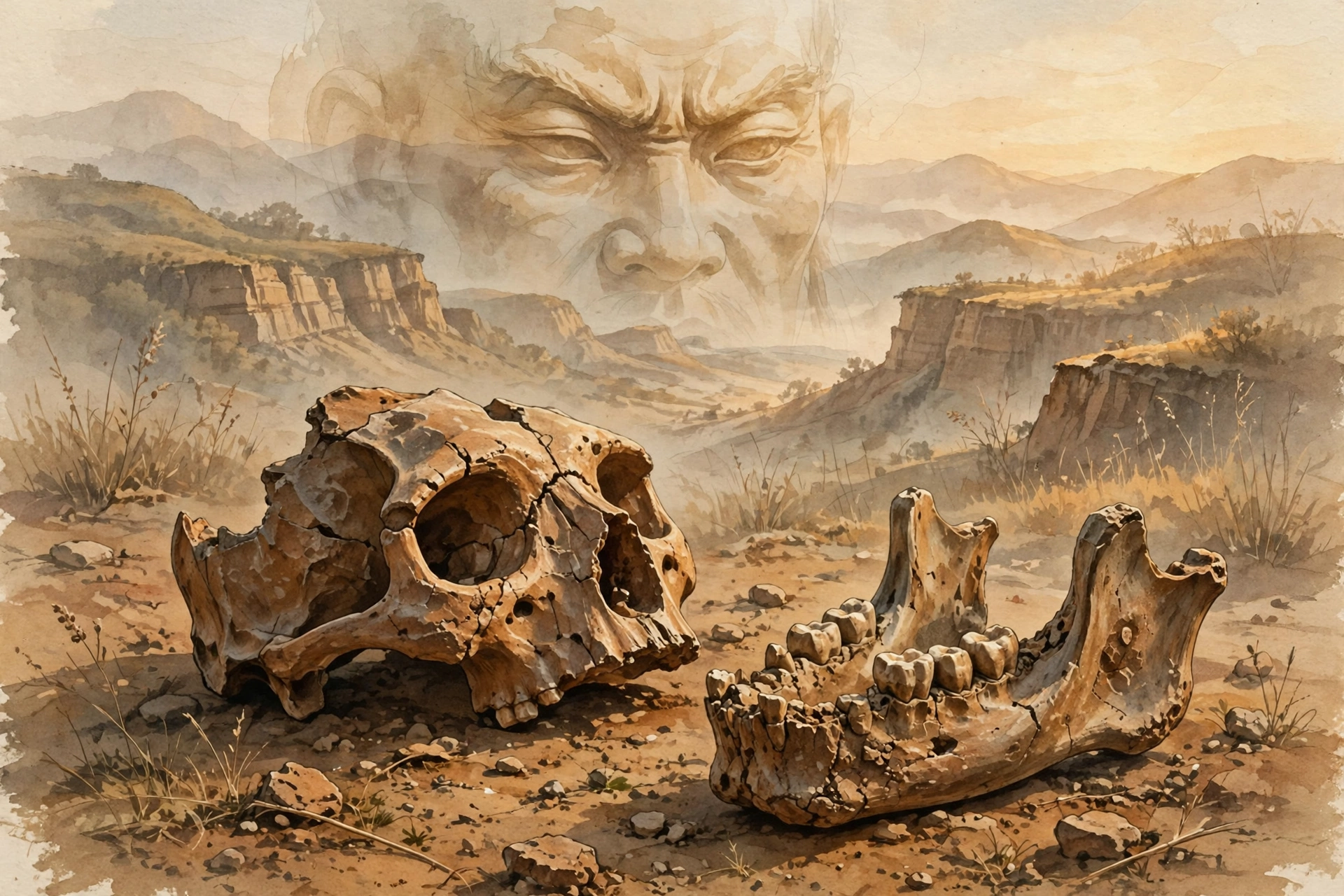
The breakthrough comes from a skull fragment and a jaw fragment found at the Xujiayao archaeological site in northern China between 1976 and 1979. They were excavated alongside other fossils from the same site, but only now, after a detailed protein analysis, have researchers been able to place these ancient Denisovan fossils firmly on the human family tree. The work, published in the journal Nature, identifies the Xujiayao remains as Denisovan and uses them to describe what members of this group may have looked like.
That description matters because the Denisovan fossil record is remarkably thin. The group is thought to have lived in East Asia from at least 300,000 to 45,000 years ago, yet very few ancient Denisovan fossils have ever been linked to it with confidence. Every new identification therefore carries unusual weight, since it can shift the map of where Denisovans lived and sharpen a portrait that has long been drawn mostly from DNA rather than bone.
The Short Version
Here is the story in brief. Two ancient Denisovan fossils from Xujiayao, a site in northern China, have been identified as Denisovan through ancient proteins. Measurements and 3D computer models of the reconstructed skull and jaw then allowed researchers to describe the group’s appearance in unusual detail. The portrait that emerges is of a robust, heavy-boned people with low, relatively flat skulls, prominent brow ridges, and flattened facial features.
The identification also redraws the Denisovan map. Until now, the group has commonly been associated with cold Siberian caves and Tibetan mountains, the places that produced the best known Denisovan evidence. Xujiayao sits in northern China, and confirming its fossils as Denisovan supports the idea that the group was widespread across East Asia rather than confined to those famous cold and high places.
There is a further implication that researchers state plainly. These fossils share key traits with remains found at other sites across East Asia, which leads the study authors to suggest that many other fossils from the region may belong to this same Denisovan lineage. If that suggestion holds up, museum drawers across East Asia may already hold more Denisovans than anyone realized, waiting for the same kind of protein test to reveal them.
How Ancient Denisovan Fossils Were Identified
Researchers led by Qiaomei Fu at the Chinese Academy of Sciences extracted proteins from both the skull fragment and the jaw fragment. They identified 18 ancient proteins in total and analyzed their sequences alongside data from other ancient hominins and modern humans. Small differences in those sequences act like molecular signatures, revealing evolutionary relationships and helping to place a fossil on the human family tree.
The decisive clue was a specific collagen variant called COL1A2-996K. According to the study, this variant has been found in Denisovans but not in Neanderthals or modern humans, which makes it a powerful marker for telling these close relatives apart. Combined with the physical traits of these ancient Denisovan fossils, the molecular evidence settled the question. As the scientists wrote, “Molecular phylogeny and shared morphological traits classify Xujiayao, initially assigned to different lineages, as Denisovan.”
Only after identifying these ancient Denisovan fossils did the team turn to appearance. They measured the remains and built 3D computer models of the reconstructed skull and jaw bones, then compared those shapes against fossils from Neanderthals, modern humans, and other ancient hominins. That comparison is what separates this study from a simple labelling exercise: it does not just name the fossils, it uses them to describe a whole group.
What Ancient Denisovan Fossils Reveal About Their Face
So what did the Denisovans actually look like, as far as these fossils can tell us? According to the paper, they had low, relatively flat skulls with thick bones, prominent brow ridges, and flattened facial features. It is a rugged portrait, and it fits the image of a robust ancient human group built for a hard life, though the study itself sticks to the bones rather than speculating about lifestyle.
Just as interesting is the mixture the researchers describe. The physical traits shown by ancient Denisovan fossils appear to be a combination of ancestral hominin features and characteristics shared by Neanderthals and later human species. That blend is exactly what makes them hard to classify from shape alone: they carry older traits alongside features that point toward their closer relatives, so a fragment viewed in isolation can easily be assigned to the wrong lineage, as happened at Xujiayao.
The study’s own summary of that wider picture is worth quoting directly: “The inclusion of additional members of East Asian late Middle Pleistocene archaic Homo, alongside Xujiayao, expands the morphological variability of East Asian Denisovans.” In plain terms, the Denisovan range of shapes just got wider, because more East Asian fossils now sit inside it. That is a normal and healthy outcome in paleoanthropology: a group looks more varied once more of its members are correctly recognized.
Why This Matters
The geography of ancient Denisovan fossils is the headline finding that reaches beyond specialists. By confirming the Xujiayao fossils as Denisovan, the study tells us more about where Denisovans lived, and together with other fossil evidence it supports the idea that they were widespread across East Asia. That extends their story far beyond the cold Siberian caves and Tibetan mountains they are commonly associated with, and it reframes northern China as part of their home range rather than a borderland.
That reframing also changes how older finds should be read. Because these ancient Denisovan fossils share key traits with remains found at sites across East Asia, the researchers suggest that many other fossils from the region may belong to this same Denisovan lineage. In other words, the Denisovan record may not be quite as empty as it looks: some of its members may have been sitting in collections under other labels all along, misassigned in the same way Xujiayao once was.


What to Watch Next
The most immediate question is which other East Asian fossils will be tested next. The study authors suggest many fossils from the region may belong to the same Denisovan lineage, but a suggestion is not a confirmation, and each candidate will need its own protein or morphological case. Readers should watch for follow-up work that applies the same protein approach to other late Middle Pleistocene remains, since each positive result would widen the Denisovan map a little further.
Finally, it is worth watching how the wider field responds. A Nature paper carries weight, but paleoanthropology advances through challenge and replication, and other teams will test the protein signatures of ancient Denisovan fossils and shape comparisons against their own material. The full study, The proteome of Middle Pleistocene Xujiayao and common Denisovan morphology by Song Xing and colleagues, is the reference point for that debate, and its DOI record will track citations and responses as they appear.
Final Word
Strip away the technical detail and the story is simple, and it is why these particular bones deserve attention. A skull fragment and a jaw fragment, dug up in northern China in the 1970s and long assigned to other lineages, ancient Denisovan fossils that have now been shown to be Denisovan through ancient proteins. From them, researchers have reconstructed a face with a low, flat skull, thick bones, prominent brow ridges, and flattened features, and they have placed its owners across a much wider stretch of East Asia than the old map allowed.
That is the value of this kind of work. It does not rewrite human evolution in a single stroke, and it does not pretend that two fragments answer every question. It takes a group long described as mysterious, gives it a measured face and a wider homeland, and points to where the next answers may already be waiting in museum collections. For a people known mostly from fragments and DNA, that is a remarkable step forward.