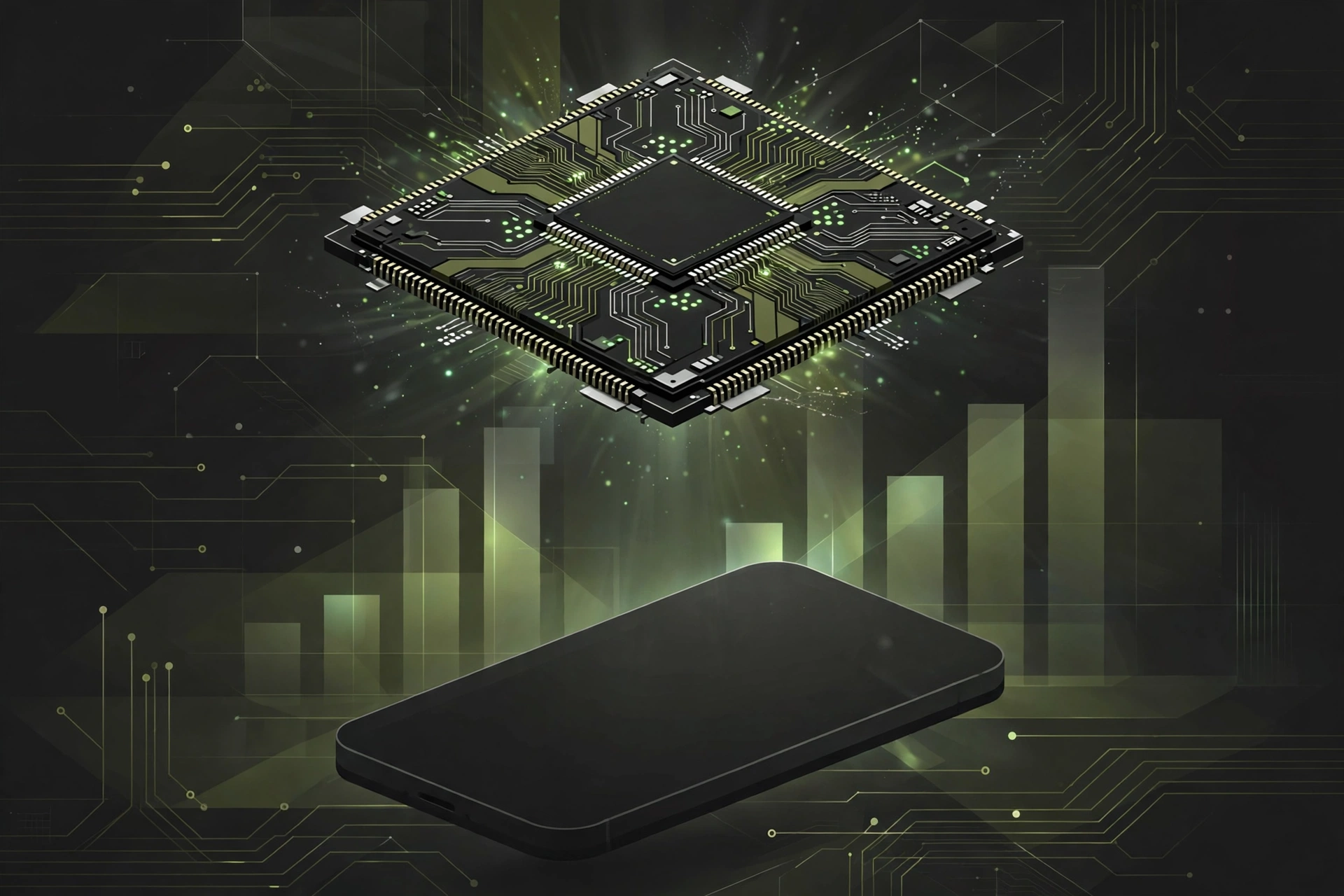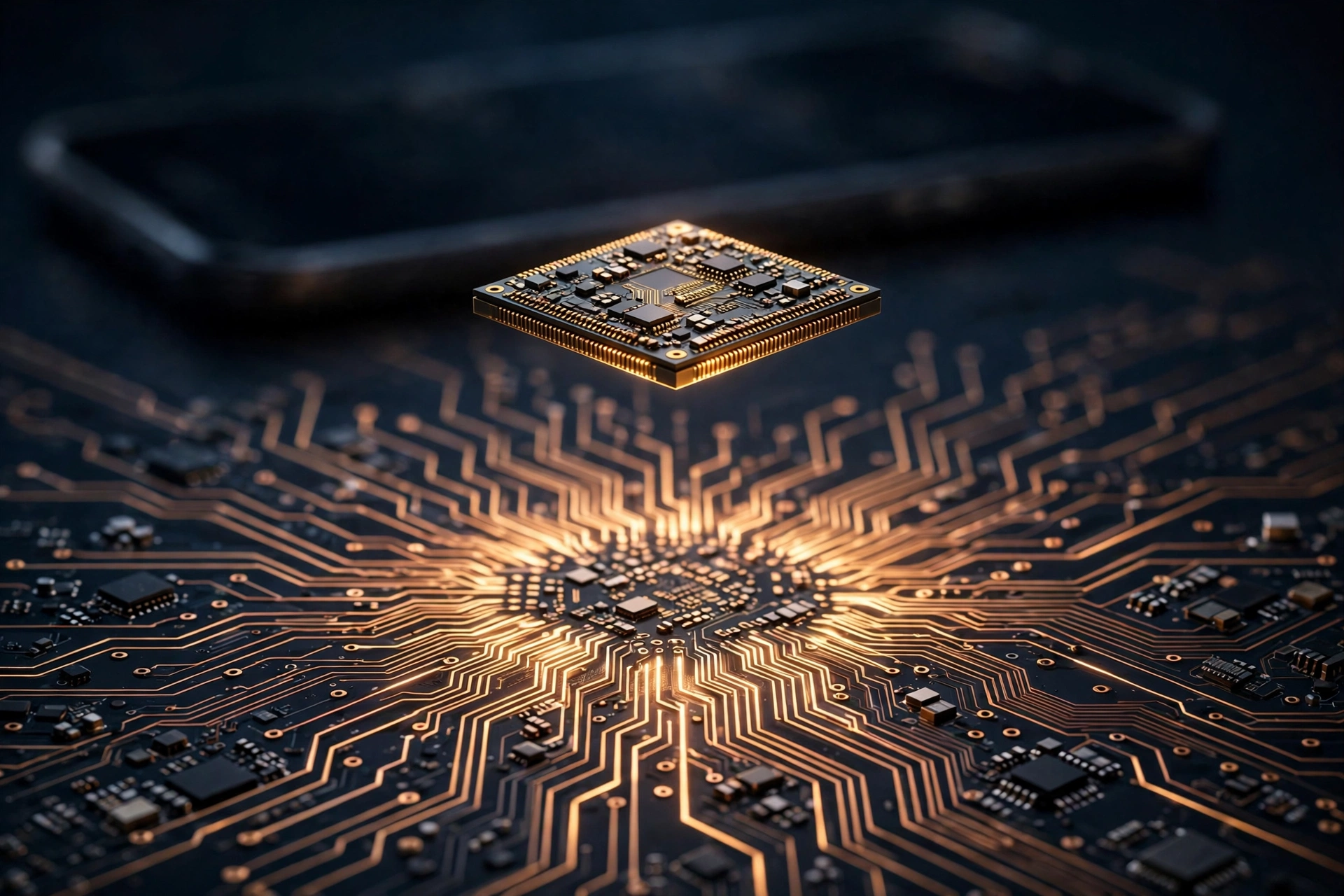
Four years on, the chip inside the iPhone 14 Pro and iPhone 15 still outscores most new mid-range silicon. Here are the numbers and the used-buy verdict.
Apple A16 Bionic benchmarks still make interesting reading in 2026, four years after the chip launched inside the iPhone 14 Pro. NanoReview’s crowd-sourced aggregate puts the chip at 1,626,008 on AnTuTu 11, with a Geekbench 6 single-core score of 2,631 and a multi-core score of 6,602. Strong numbers for a chip that now powers used phones.
The A16 Bionic arrived on September 7, 2022, built on a 4-nanometer TSMC process with 16 billion transistors. It debuted in the iPhone 14 Pro and Pro Max, then moved into the iPhone 15 and 15 Plus a year later. Apple followed it with the A17 Pro in 2023, then the A18 and A19 lines. That is exactly why it deserves a fresh look: it is the chip inside the most affordable used iPhones that still feel fast.
This article pulls its numbers from NanoReview’s A16 Bionic page, cross-checked against NotebookCheck and Apple’s launch claims. Every Apple A16 Bionic benchmark figure below is tagged (CR) for crowd aggregate, because NanoReview pools user-submitted results rather than running controlled lab tests. Treat the scores as directional, not as laboratory gospel.
The Short Version
- Launched September 7, 2022, on a 4nm TSMC process with 16 billion transistors.
- Six cores: two Everest cores at 3.46 GHz and four Sawtooth cores at 2.02 GHz.
- Apple A16 Bionic benchmarks: AnTuTu 11 total of 1,626,008 (CR), Geekbench 6 single-core 2,631 and multi-core 6,602 (CR).
- Five-core GPU at 1,398 MHz, 16-core Neural Engine rated at 17 TOPS.
- Found in the iPhone 14 Pro, iPhone 14 Pro Max, iPhone 15 and iPhone 15 Plus.

Why a 2022 Chip Still Deserves a Look
The used iPhone market runs on chips like this one. A buyer choosing between a refurbished iPhone 14 Pro and a new mid-range Android phone is choosing between the A16 and a newer but weaker chip. Raw silicon age matters less than the scores, and the Apple A16 Bionic benchmarks still clear the bar for smooth scrolling, 4K video editing and gaming.
Inside the Silicon
The A16 pairs two Everest performance cores at 3.46 GHz with four Sawtooth efficiency cores at 2.02 GHz, all on ARMv8.6-A. The layout matches the A15’s 2+4 shape, but the move from 5nm to 4nm and a larger 16 MB L2 cache let Apple push clocks higher while cutting power. Apple claimed at launch that the performance cores use 20 percent less power than the A15’s, a company claim, not an independent measurement.
Graphics come from a five-core Apple GPU at 1,398 MHz, rated at about 1,789 GFLOPS, with 50 percent more memory bandwidth than the A15, according to Apple. The 16-core Neural Engine is rated at 17 TOPS, up from 15.8 TOPS on the A15. Memory is LPDDR5 at 3,200 MHz with up to 51.2 GB/s of bandwidth, and the chip supports up to 6 GB of RAM. The 11th-generation iPad (A16) uses a four-core GPU version, according to Wikipedia; every score here reflects the five-core iPhone version.
Apple A16 Bionic Benchmarks: The Headline Numbers
Apple A16 Bionic benchmarks from NanoReview give the chip an AnTuTu 11 total of 1,626,008, about 15 percent above the A15 Bionic’s 1,413,275. The A17 Pro’s aggregate of 1,467,470 looks lower on this one test, a reminder that crowd aggregates move with the mix of submitted results. Geekbench tells a cleaner story.
Apple A16 Bionic benchmarks on Geekbench 6 record 2,631 single-core and 6,602 multi-core, about 14 percent and 15 percent ahead of the A15. The A17 Pro moves further ahead, at 2,969 and 7,599, roughly 13 percent and 15 percent above the A16.
Apple A16 Bionic Benchmarks in Daily Use
Apple A16 Bionic benchmarks in gaming show the A16 at its least aged. NanoReview’s aggregate gives it a gaming performance rating of 56 out of 100, against 48 for the A15 and 59 for the A17 Pro. In 3DMark, the A16 scores 4,266 on Solar Bay and 3,335 on Wild Life Extreme, both with stability in the low 70s. The A17 Pro pulls ahead on Solar Bay at 6,089, helped by hardware ray tracing, but the A16 still clears the bar for smooth play at high settings.
For everyday work, the single-core score matters most. Apple A16 Bionic benchmarks put it at 2,631, which still counts as strong in 2026. App launches, photo work and on-device AI run without hesitation.
Same Chip, Different Phones
Apple A16 Bionic benchmarks differ from phone to phone, even though the silicon is identical. NanoReview’s per-phone AnTuTu 11 aggregates put the iPhone 15 at 1,672,293, the iPhone 15 Plus at 1,527,281, the iPhone 14 Pro at 1,501,273 and the iPhone 14 Pro Max at 1,324,600. The gap between the top and bottom of that list is about 26 percent. Cooling, battery health, storage and software version all move the number. A single score describes a chip inside a particular phone on a particular day.
Battery, Connectivity and the Rest
Apple A16 Bionic benchmarks cover CPU, GPU and memory, not endurance, so the battery picture needs care. NanoReview rates the A16’s battery life at 95 out of 100, but that reflects the phones, not the chip alone. The iPhone 14 Pro and iPhone 15 have different battery sizes, displays and modems, so endurance varies by model. A used phone’s degraded battery matters more than the chip.
Connectivity is solid for most buyers. The chip supports 5G with download speeds up to 7,500 Mbps and upload up to 3,500 Mbps, Wi-Fi 6 and Bluetooth 5.3. There is no Wi-Fi 6E or Wi-Fi 7 here. In practice, buyers on sub-6 GHz 5G or LTE in Bangladesh, South Asia and much of Europe will see no daily difference from newer modems. The extra headroom matters mainly for US buyers on mmWave networks or users who already own a Wi-Fi 6E router.
Battery life is a property of the phone, not the chip, so no battery winner is declared here.
Who Should Buy an A16 Phone in 2026
Apple A16 Bionic benchmarks make the used-buy case in one line: flagship speed at a used price. The pick-if list below turns that into a decision.
- Pick an A16 iPhone if: you want flagship speed at a used price, you play demanding games, or you value years of iOS updates.
- Skip it if: you need the newest on-device AI features, you want Wi-Fi 6E or 7, or a new A18 or A19 phone costs nearly the same where you shop.

Quick Answers
What do Apple A16 Bionic benchmarks show in 2026?
Apple A16 Bionic benchmarks put the chip at 1,626,008 on AnTuTu 11 and 2,631 single-core and 6,602 multi-core on Geekbench 6. Those scores still beat most 2026 mid-range chips and sit about 15 percent above the A15 Bionic.
Which phones use the Apple A16 Bionic?
The iPhone 14 Pro, iPhone 14 Pro Max, iPhone 15 and iPhone 15 Plus. The 11th-generation iPad (A16) uses a version of the chip with a four-core GPU, according to Wikipedia.
Is the A16 Bionic still good for gaming?
Yes, for most titles. It scores 4,266 on 3DMark Solar Bay and 3,335 on Wild Life Extreme, with stability in the low 70s under sustained load. Expect smooth play at high settings, with some throttling in long sessions.
Apple A16 Bionic Benchmarks: The Used-Buy Verdict
Apple A16 Bionic benchmarks confirm a simple point: a 2022 flagship chip can still outrun most 2026 mid-range silicon. The AnTuTu 11 total of 1,626,008 and the Geekbench 6 scores of 2,631 and 6,602 put it ahead of the A15 and within reach of the A17 Pro on CPU work. Gaming and daily speed hold up.
The limits are generational, not fatal. The Neural Engine is half the A17 Pro’s, there is no Wi-Fi 6E, and future AI features are unconfirmed. For a used buy, those are acceptable trade-offs at the right price. It is the cheapest way to get flagship-class speed.
Sources
- NanoReview, Apple A16 Bionic: specs and benchmarks, accessed October 31, 2026 (CR).
- NanoReview, Apple A15 Bionic: specs and benchmarks (CR).
- NanoReview, Apple A17 Pro: specs and benchmarks (CR).
- NotebookCheck, Apple A16 Bionic vs Apple A15 Bionic.
- XDA Developers, Apple unveils the new A16 Bionic, its most powerful mobile chip, September 7, 2022.
- Wikipedia, Apple A16.
Score methodology: Lab-reviewer (LR) scores come from named outlets’ controlled testing. Crowd (CR) scores come from aggregator databases (NanoReview) that pool user-submitted results and are less controlled. Company (MF) numbers are manufacturer claims. We treat LR as strongest, CR as directional, MF as attributed.