AI data centers could soon roll off a production line the way cars do. Runware, a London-based AI infrastructure startup, told TechCrunch on October 30, 2026 that it plans to build a factory that assembles its modular data centers on an assembly line, with pods going online within 48 hours of arriving at a prepared site.
One detail matters more than the headline. The 48-hour figure covers installation and setup, not the factory build. A pod once took three weeks to build, and Runware says that will fall to one day as production ramps up. No independent test of either number has been published.
Runware already builds its Sonic Inference Pod, a self-contained data center inside a 20-foot shipping container, at a factory in Romania. The new plan adds a production line and a second factory, with output put at 30 megawatts a day by 2028.
AI Data Centers: The Short Version
- Runware plans factory-line production of its Sonic Inference Pod, a container-sized modular data center built for AI inference work.
- The company claims factory-built AI data centers can go online within 48 hours at a prepared site, and build time will fall from three weeks to one day.
- The target is 30 megawatts a day by 2028, or nearly 1 gigawatt a month, according to chief executive Flaviu Radulescu.
- Funding stands at more than $60 million, including a $50 million Series A in December 2025. A Series B is planned.
- Runware claims $1 billion in committed interest since outside sales began a month ago, covering over 20 megawatts. No customer list is published.
- No independent test of either claim has been published. Both remain company claims.
Why AI Data Centers Need a Faster Build
Traditional AI data centers take years to plan, permit, build and fill with servers, while demand for AI compute grows faster than that schedule allows. The US was expected to add about 10 gigawatts of data center power this year, TechCrunch notes, citing Goldman Sachs. Runware says 30 megawatts per day by 2028 would produce roughly that much in a year.
A production line can only help if the rest of the chain keeps up. Power, land, cooling, networking and GPU supply all sit outside the factory walls, and any one of them can stall a deployment. For AI data centers, the build is only one part of the schedule.
Nvidia announced its Vera Rubin AI factories and the DSX POD earlier in 2026, saying its container design can cut on-site work from about six months to as little as 14 days at a prepared site, with deliveries from early 2027. Runware says it has actually built a factory.
The Factory Plan in Runware’s Own Words
Two factories in Romania
Radulescu told TechCrunch that Runware already has two factories. One has been used for a few years to build the pods. The second was started earlier this year and should go online early next year.
What a pod actually is
The Sonic Inference Pod is a self-contained data center that fits inside a 20-foot shipping container. Each pod carries roughly 1 megawatt of IT load and can hold up to 1,200 GPUs, according to CryptoBriefing. Servers, networking and cooling are built in.
The pods are built for inference, the work of running trained AI models to answer questions, generate images and process requests. That focus suits modular AI data centers, built for steadier inference demand at smaller sites.
Customers can supply their own GPUs or rent compute from Runware, paying a monthly fee plus power and internet.
The 48-hour number, explained
Radulescu said Runware aims to bring the pods online within 48 hours, and that the time covers installation and setup, not build time. A pod that takes a day to build still needs transport, a prepared site, power and internet before the 48-hour clock can start.
AI Data Centers: The Money and the Customers
Runware has raised more than $60 million to date, TechCrunch reports, and plans to raise a Series B. The $50 million Series A from last December is funding the factory that will build AI data centers on a line. CryptoBriefing puts total funding at $66 million and names backers Dawn Capital and Comcast Ventures.
The public record on customers is thin. CryptoBriefing reports 10 pods in operation across the US, Europe and Asia-Pacific, and names Higgsfield AI and website builder Wix as customers. TechCrunch names no customers. Treat the names as reported: 10 pods is a small start for AI data centers at scale.
Runware said in an October 1, 2026 release that its approach could cut infrastructure costs to around 1% of a traditional facility, excluding the GPUs. Its serverless GPU platform starts from $0.63 per GPU-hour, presented as up to 50% less than typical hyperscaler rates. CryptoBriefing reports a company claim of 30-80% lower operating costs per GPU-hour. None has been independently verified.
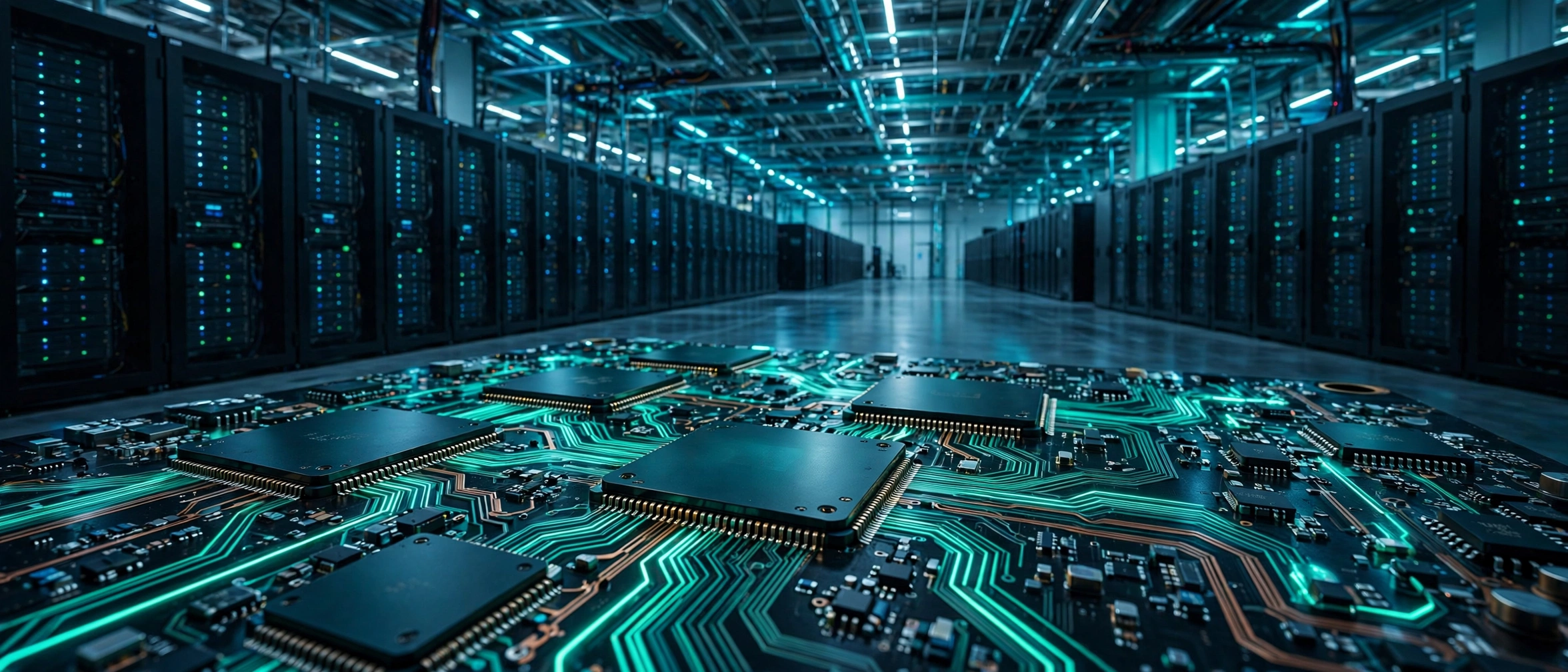
AI Data Centers Face a Grid Problem, Not Just a Build Problem
Runware says its pods only need power and an internet connection. They use closed-loop liquid cooling with air-cooled radiators, needing no water connection. The pods run silent up to 86 degrees Fahrenheit, Radulescu said, and the company aims to use renewable energy as its main source.
That removes one headache, but the bigger one stays. For AI data centers, a pod can go online in days only at a site that already has power, and securing grid capacity is a challenge across the industry. The 397-megawatt pipeline, with potential to expand to 1.2 gigawatts, is planned sites, not guaranteed power.
TechCrunch points to Arrival, the electric vehicle startup once valued at over $13 billion, which struggled to mass-produce vehicles cost-effectively. Radulescu argues Runware is different: factory staff costs are low relative to the value of deploying AI compute, and the company designs its own systems and buys widely available, affordable parts. Runware hired an automotive plant manager.
Sourcing is a further risk: pumps and fans come from Germany, and networking still depends on Nvidia, so a production line for AI data centers is only as reliable as its slowest supplier.

What to Watch Next
Three milestones will test the story. First, the second Romania factory must go online early next year. Second, production must ramp from a three-week build toward the claimed one-day build. Third, Runware must turn its $1 billion in claimed committed interest into signed, delivered capacity. Those steps decide whether factory-built AI data centers become a real category or stay a pitch.
After that, the company plans to expand to the United States and other regions, and to raise its Series B. Radulescu predicts modular systems will soon become the standard for large AI deployment.
Quick Answers
Can AI data centers really go online in 48 hours?
Runware claims its pods can go online within 48 hours at a prepared site, covering installation and setup only. The factory build is separate, and no independent test has been published.
What is the Sonic Inference Pod?
It is a self-contained modular data center inside a 20-foot shipping container, built for AI inference work. Each pod carries roughly 1 megawatt of IT load and up to 1,200 GPUs, according to CryptoBriefing.
How much has Runware raised?
More than $60 million to date, according to TechCrunch, including a $50 million Series A in December 2025. CryptoBriefing puts the total at $66 million.
Who buys Runware pods?
CryptoBriefing names Higgsfield AI and Wix as customers, and reports 10 pods in operation. TechCrunch names no customers.
The Takeaway
Runware has a real product, a real factory and a clear idea: treat AI data centers like manufactured goods instead of construction projects. The 48-hour setup claim, the one-day build target and the 30-megawatt-per-day goal for 2028 are company claims, with the evidence today a second factory still being finished and 10 pods in the field.
Judge the story on what happens next. If the new factory opens early next year and named customers take delivery, the model will have earned its first proof. Until then, it is a promising bet with everything still to prove.
Sources and Attribution
- TechCrunch, Can AI data centers be mass-produced like cars? This startup aims to find out, October 30, 2026.
- CryptoBriefing, Runware wants to build AI data centers the way Detroit builds cars, October 30, 2026.
- Runware, Runware Launches Serverless GPU Platform for AI with Prices from $0.63 per GPU-Hour, October 1, 2026, via EINPresswire. Used for the $0.63 per GPU-hour figure and the 1% infrastructure cost estimate, both company claims.
- Goldman Sachs data center power estimate, as cited by TechCrunch, October 30, 2026.
PetaTech24 did not test a Sonic Pod, visit a Runware factory, or independently verify any company claim in this article. All cost, speed and demand figures attributed to Runware are company claims unless labelled as reported by a named outlet.