
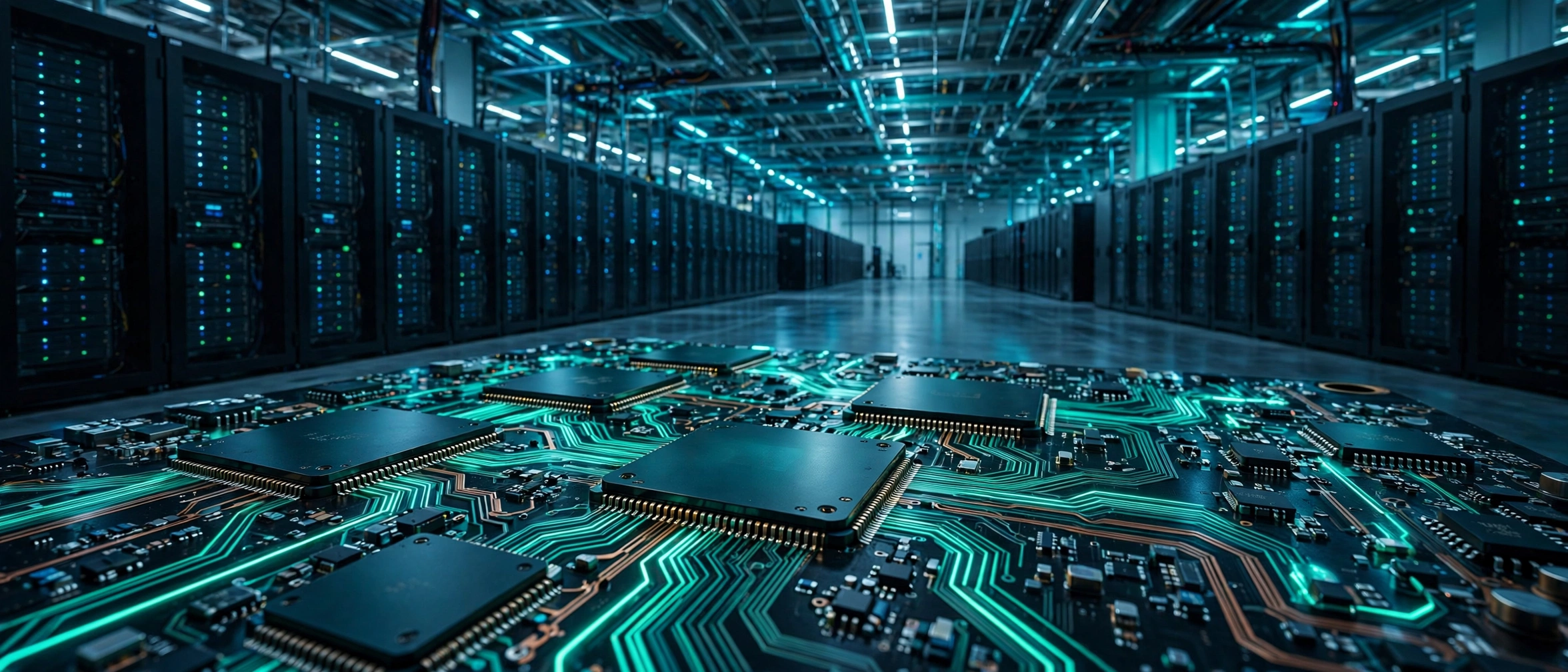
The Google TPU Oracle partners announcement on October 27, 2026, put Google custom AI chips on a rival cloud for the first time. Oracle said it will offer Google Tensor Processing Units, known as TPUs, through Oracle Cloud Infrastructure. Alphabet announced the arrangement on Tuesday, October 27, the day before its third quarter earnings report.
CNBC reported the move as the first time customers will be able to access TPUs outside Google’s own infrastructure. Google developed TPUs from 2013 and only began selling them to outside customers in the second quarter of 2026, according to CNBC. The Google TPU Oracle partners step extends a business that is still new, rather than a long established sale. Google declined to comment to CNBC.
The Short Version
- Oracle will offer Google TPUs through its cloud, in what CNBC reported as the first access outside Google infrastructure, announced October 27, 2026.
- Google TPU Oracle partners build on external TPU sales that began in the second quarter of 2026, after development that started in 2013.
- Anthropic is the largest TPU customer named in the reporting, with an October 2025 deal for up to 1 million TPUs, worth tens of billions of dollars.
- OpenAI is planning to buy TPUs, CNBC confirmed after The Information first reported it. That is a reported plan, not a confirmed deal.
- Most TPU revenue from existing agreements is expected in 2027, not 2026, according to Google chief financial officer Anat Ashkenazi, and the Google TPU Oracle partners forecasts differ widely.
The Bigger Picture
The central question is whether Google can sell its chip without weakening the cloud business it was built to support. The Google TPU Oracle partners route through Oracle reaches customers who may not want to move workloads to Google Cloud. It also creates a second sales channel against Nvidia dominance.
Margin estimates show the trade off. TD Cowen estimates external TPU sales carry about a 20% operating margin, against roughly 35% for Google cloud overall, according to CNBC. A lower margin on larger sales can still add profit. For Google TPU Oracle partners, treat the 20% figure as an analyst estimate, not a Google disclosure.
Thomas Kurian, Google Cloud chief executive, put the internal case in public. At a Goldman Sachs conference in September 2026, he said Google AI servers pay for themselves in under two years and that servers running its own silicon reach payback in roughly half that time, through stack optimization. That is a company claim, not an independent audit. The Google TPU Oracle partners case still needs disclosed partner results.
Google TPU Oracle partners: What Oracle Will Actually Offer
In the Google TPU Oracle partners deal, Oracle will offer TPUs as part of Oracle Cloud Infrastructure, so customers can use Google custom silicon without using Google Cloud.
The Google TPU Oracle partners arrangement tests how far chip choice can be separated from cloud choice. Choosing a leading AI chip has often meant choosing the cloud that ran it. If Oracle customers can run TPUs inside Oracle systems, that link weakens for workloads that fit TPUs and the software around them. Workload fit and software support still decide whether a switch is practical.

Google TPU Oracle partners and the Anthropic Demand Engine
For Google TPU Oracle partners, Anthropic is the demand story behind the headlines. Anthropic, whose Claude models compete with Gemini, agreed in October 2025 to use up to 1 million TPUs in a deal worth tens of billions of dollars, according to CNBC. Mizuho estimated the agreement brings nearly 1 gigawatt of capacity online in 2026. Mizuho called it Google arming its closest model competitor, an analyst characterization.
Financing now sits alongside chip supply for the Google TPU Oracle partners story. Broadcom, which works with Google on TPUs, detailed a $63 billion vehicle backed by Blackstone and three big banks. The vehicle will buy TPUs and networking equipment from Broadcom and lease them to Anthropic for five years. William Blair analysts estimated the financing covers about half of Anthropic’s 2027 needs, A separate summary confirms the structure and lease.
Anthropic itself has stressed that it does not rely on one supplier. In its October 26, 2026 filing, Anthropic said it uses chips from Google, Amazon, Nvidia and Advanced Micro Devices, to select chips by price performance and efficiency for each workload.
It cited TPU access across generations. OpenAI is a weaker signal: CNBC confirmed it plans to buy TPUs, but no terms were disclosed and no deal was confirmed. A plan to buy is not a purchase.
Google TPU Oracle partners: The Money, the Margins and the Estimates
All figures in this section are in US dollars, and the Google TPU Oracle partners forecasts must not be averaged into a single number. TD Cowen models $9.4 billion for the second half of 2026 and $62.5 billion for 2027, while Wells Fargo expects about $9 billion in the third quarter and $99 billion in 2027, according to CNBC. The 2027 gap is $36.5 billion. A corroborating summary of the CNBC figures repeats both forecasts separately.
Timing cuts against any quick revenue verdict. On the July 2026 earnings call, chief financial officer Anat Ashkenazi said only a small portion of TPU revenue from existing agreements would be recognized in 2026, with the vast majority arriving in 2027. That guidance means the Google TPU Oracle partners announcement should not be read as a 2026 earnings event. Readers who want proof will need to wait for 2027 recognition, delivery and customer disclosure.
Cost claims need the same care. SemiAnalysis estimates that owning and operating Google’s latest Ironwood TPU costs about 44% less than an Nvidia GB200 server. That is an estimate, not an invoice, and it depends on configuration. It does not prove every deployment will cost 44% less.
Google Cloud booked $25 billion in the second quarter, behind AWS ($42 billion) and Azure ($29 billion), up 82%. Analysts expect about 90% in the third quarter, CNBC reported.
Confirmed, Reported and Still Unknown
Confirmed: Oracle will offer Google TPUs, the arrangement was announced October 27, 2026, TPUs date from 2013, and outside sales began in the second quarter of 2026. Anthropic agreed in October 2025 to use up to 1 million TPUs in a deal worth tens of billions of dollars, and the Broadcom vehicle totals $63 billion, leased to Anthropic for five years.
Reported, but not confirmed as a completed deal: OpenAI plans to buy TPUs. CNBC confirmed the plan after The Information first reported it, and no terms were disclosed. The distinction matters, because a plan can change, shrink or fail to close. This article does not upgrade the plan into a purchase.
Still unknown: Oracle pricing, the size of the first Oracle deployment, the software and networking details that decide workload fit, and how much TPU revenue Google will recognize in 2027. The $62.5 billion to $99 billion range for 2027 shows how little is settled. The Google TPU Oracle partners story will be tested by disclosed contracts, not by further announcements alone.

What to Watch Next
Watch for three disclosures. First, any Oracle or Google statement on pricing, availability and deployment size. Second, any confirmed OpenAI purchase terms. Third, Alphabet earnings commentary and 2027 revenue recognition, to test the CFO timing guidance.
Quick Answers
What does the Google TPU Oracle partners announcement change?
It gives Oracle cloud customers access to Google custom AI chips outside Google infrastructure, for the first time according to CNBC. It does not by itself prove a change in market share, pricing or performance for any specific workload.
Is OpenAI now a Google TPU customer?
Not on the evidence reported. OpenAI is reported to be planning to buy TPUs, with no confirmed deal and no disclosed terms. Treat that as intent until a purchase is confirmed.
Why do the revenue estimates differ so much?
TD Cowen and Wells Fargo use different periods and assumptions, and most revenue is expected in 2027. The $62.5 billion and $99 billion figures are separate estimates. They were not averaged here.
The Takeaway
The Google TPU Oracle partners arrangement is a real change in how AI chips reach buyers, because it separates Google silicon from Google Cloud for the first time in the reporting. Anthropic is the proven demand, Broadcom financing funds it, and the reported OpenAI plan draws other buyers.
The financial case is still mostly a 2027 case. Estimates vary by tens of billions, external margins are estimated thinner than cloud margins, and cost advantages depend on deployment. Judge this story in 2027, on disclosed deployments, confirmed customers and recognized revenue.
Sources and Attribution
CNBC, MacKenzie Sigalos and Jordan Novet, reporting on Google TPU Oracle partners, October 28, 2026. No CNBC URL is listed because no verified CNBC article URL was returned in the research for this article. The facts are attributed to CNBC reporting as described in corroborating summaries. See the external links in the body for corroborating summaries.
Corroborating summary of CNBC figures: Pivot News summary of the CNBC report, October 28, 2026, repeating the TD Cowen and Wells Fargo estimates, cloud revenue figures and Kurian payback remarks.
Separate summary of the same reporting: AIStockWire summary, October 28, 2026, repeating the SemiAnalysis estimate, Anthropic deal, Broadcom financing and OpenAI plan.
The Information, first report on OpenAI plan to buy TPUs, October 27, 2026, as reported by CNBC. Anthropic initial public offering filing, October 26, 2026, as reported by CNBC. SemiAnalysis, Ironwood cost estimate, via CNBC. TD Cowen and Wells Fargo, TPU revenue estimates, via CNBC. Mizuho, Anthropic capacity estimate, via CNBC. William Blair, Broadcom financing coverage estimate, via CNBC. Goldman Sachs Communacopia and Technology Conference, Kurian remarks, September 2026, via CNBC and corroborating summaries.
All analyst figures are estimates. All company payback and cost claims are attributed and are not independent PetaTech24 findings. PetaTech24 did not test TPUs, Oracle Cloud or any chip named in this article. This article is not financial advice.


