Global smartphone shipments Q3 2026 fell 20% year on year to 254.7 million units, according to research firm Omdia, making it the weakest third quarter since 2013. Samsung kept first place, Apple held flat, and the three big Chinese brands in the top five lost between 29% and 39% of their volume.
Omdia blames rising smartphone prices. Memory chips have become scarce and expensive as AI data centers absorb supply, and brands are passing the cost on, cutting cheaper models, and protecting margins. The result is that smartphone shipments Q3 2026 came in about 64 million units below a year earlier, by PetaTech24’s calculation from Omdia’s figures.
Counterpoint Research, in its own preliminary estimate on October 12, reached the same headline number, a 20% fall, and IDC put the decline slightly deeper at 22.0%. The trackers disagree on the exact depth and on how far back the record stretches, but they agree on the direction, the order of the top five, and the cause. This article uses Omdia’s figures as the lead, and shows where the others differ, without averaging them.
In Brief
- Global smartphone shipments Q3 2026: 254.7 million units, down 20% year on year (Omdia).
- Lowest third-quarter volume since 2013, per Omdia. Counterpoint says since 2012.
- Samsung first at 57.8 million units, down 5%. Apple second at 56.5 million, flat year on year.
- Xiaomi third at 30.7 million, down 29%. Oppo fourth at 23.4 million, down 39%. Vivo fifth at 19.3 million, down 33%.
- Cause: rising prices driven by memory shortages. Brands are trimming lineups and favoring profitable markets.
- Outlook: Omdia expects a further 12% decline this year, then a slower fall in 2027.
Smartphone Shipments Q3 2026: The Vendor Scoreboard
Samsung shipped 57.8 million units, down 5% year on year, and Apple shipped 56.5 million iPhones, unchanged from a year earlier. The gap between them is just 1.3 million units, and together the two brands took 114.3 million units, or about 45% of all smartphone shipments Q3 2026.
Below the top two, the damage deepens fast. Xiaomi shipped 30.7 million units, down 29%. Oppo fell hardest in the top five, down 39% to 23.4 million, and vivo dropped 33% to 19.3 million. The three lost about 37 million units between them against a year earlier, by PetaTech24’s calculation.
The top five together shipped 187.7 million units, about 74% of smartphone shipments Q3 2026, leaving 67 million for every other brand combined.
Why Smartphone Shipments Q3 2026 Fell So Hard
Omdia’s explanation for smartphone shipments Q3 2026 is short: prices rose, and buyers stepped back. The price pressure starts with memory. DRAM and NAND supply has tightened as AI data centers buy up capacity, and component costs have climbed through 2026. Counterpoint tied the same drop to soaring memory prices and said global retail smartphone prices are up about 20% so far this year.
Brands are responding by selling fewer, dearer phones. Omdia says makers are focusing on profitable markets and key products, adjusting RAM and storage configurations, and trimming model lineups to manage rising costs and protect margins. That means fewer cheap configurations on the shelf and higher prices on the ones that remain. Huawei’s consumer chief Richard Yu put a number on the squeeze in October, saying memory had added about $200 to the cost of each phone, a company claim first reported by Bloomberg, and warning that further price rises are coming.

Smartphone Shipments Q3 2026: What the Other Trackers Say
Counterpoint’s preliminary estimate, published October 12 and reported by Reuters, also put the year-on-year fall at 20%, and called it the lowest third quarter since 2012, against Omdia’s 2013. Its vendor picture matches too: Samsung first with a 23% share on a 3% shipment decline, Apple at 22%, its first third-quarter share above 20%, Xiaomi down more than 30%, and Oppo and vivo each down more than 20%.
IDC’s preliminary data put the decline a little deeper, at 22.0% to 255.3 million units, the steepest decline for any quarter on record, it said. Its vendor counts sit close to Omdia’s: Samsung at 57.8 million, Apple at 57.3 million against Omdia’s 56.5 million, Xiaomi at 30.7 million, and vivo at 19.1 million. The wider gap is Oppo: IDC counts 25.6 million against Omdia’s 23.4 million, because IDC groups realme and OnePlus inside Oppo’s total.
Two details are worth keeping separate. The lowest-since year differs because each firm keeps its own history: Omdia says 2013, Counterpoint says 2012. The size of the fall differs by up to two points. Neither difference changes the story: every tracker shows smartphone shipments Q3 2026 down by about a fifth, with the top two brands taking a bigger slice of a smaller pie.
Why You Should Care
For buyers, the message from smartphone shipments Q3 2026 is that the cheap phone is getting harder to find. When brands cut low-margin models and trim RAM and storage options, the entry level thins out first. Counterpoint senior analyst Shilpi Jain said consumers are holding on to their devices longer than estimated, and increasingly considering refurbished devices and higher-value models. Longer replacement cycles feed the decline too.
PCs went through the same quarter in the same way, with global PC shipments down 21% to 57 million units on Counterpoint’s preliminary figures, driven by the same memory costs. Two device markets falling by a fifth in the same three months for the same reason points to a supply shock, not a sudden loss of interest.

What to Watch Next
Omdia expects global shipments to decline by a further 12% this year, with the market likely to keep falling in 2027 at a slower pace. Two questions stay open: memory supply, since brands have little reason to rebuild the cheap end of their lineups until DRAM and NAND prices settle, and demand, since volumes stay low if buyers keep their phones longer.
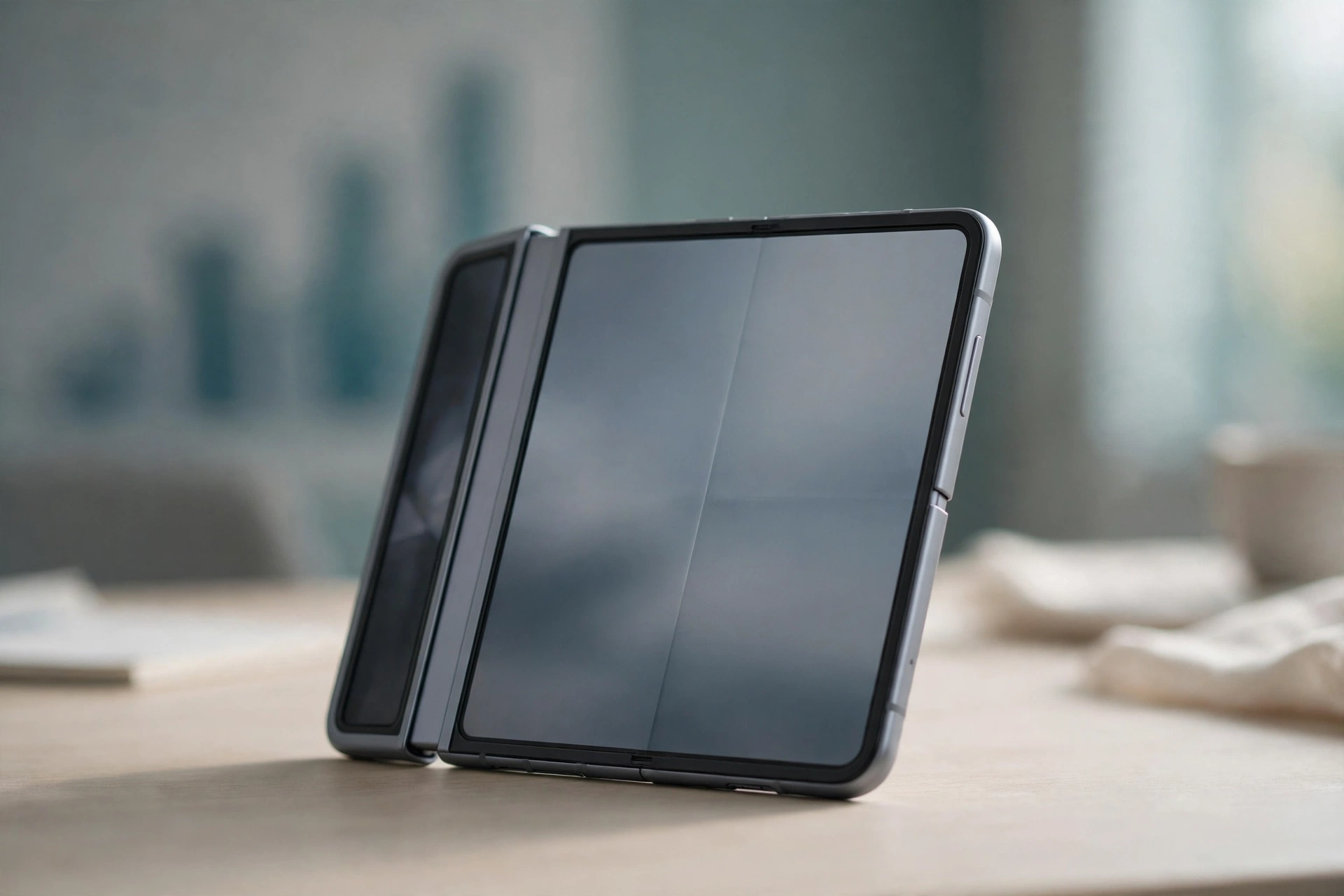
One corner of the market points the other way. Foldables are a small slice of smartphone shipments Q3 2026, but TrendForce forecasts the iPhone Duo taking 29.8% of foldable shipments in 2027, with the whole foldable market reaching 23.5 million units, up 16.3%. That is growth inside a shrinking market, and it shows where the industry’s remaining momentum sits: premium devices with a clear reason to upgrade.
Quick Answers
What were global smartphone shipments Q3 2026?
Omdia puts global smartphone shipments Q3 2026 at 254.7 million units, down 20% year on year. It was the lowest third-quarter total since 2013 on Omdia’s measure, and the weakest since 2012 on Counterpoint’s.
Which brand shipped the most phones in Q3 2026?
Samsung, with 57.8 million units, down 5% year on year. Apple was second at 56.5 million, unchanged from a year earlier, a gap of just 1.3 million units.
Why did smartphone shipments fall in Q3 2026?
Omdia attributes the fall to rising smartphone prices. Counterpoint ties it to soaring memory chip costs, as AI data centers absorb DRAM and NAND supply, with retail prices up about 20% so far in 2026. Brands answered by trimming cheap models and protecting margins.
Do other analysts agree with Omdia’s figures?
Broadly, yes. Counterpoint also reported a 20% fall, and IDC a 22.0% fall to 255.3 million units. The vendor order matches across all three. Exact totals differ because each firm measures the market in its own way, so the figures are shown side by side, not averaged.
Will smartphone shipments recover in 2027?
Omdia expects a further 12% decline this year, with the market likely to keep falling in 2027 at a slower pace. No tracker cited here forecasts a return to growth next year.
The Takeaway
The third quarter of 2026 was the smartphone market’s worst in more than a decade, and the cause sits in the price of the parts inside the phone. Omdia’s 20% fall in smartphone shipments Q3 2026, confirmed in direction by Counterpoint and IDC, came as memory costs pushed prices up and brands chose margins over volume. Samsung and Apple held their ground. Xiaomi, Oppo and vivo lost between 29% and 39%.
For anyone planning a purchase, expect fewer budget options and higher prices while the memory shortage lasts, and expect the market to stay smaller than it was. The next shipment and memory price reports will show whether the bottom is near, or whether 2027 brings a slower version of the same decline.
Sources / Attribution
- Omdia, via GSMArena, Omdia: global smartphone shipments declined 20 percent YoY in Q3 2026, October 30, 2026.
- Counterpoint Research, preliminary Q3 2026 estimates, via Reuters, Global smartphone shipments record worst third quarter in 14 years amid memory shortage, October 12, 2026.
- IDC, preliminary Q3 2026 data, as reported by Xenospectrum, Smartphone Shipments Fell 22% in Q3, October 2026.
- PetaTech24, Huawei Says Memory Costs Added About $200 to Every Phone, and Price Hikes Are Coming, October 6, 2026.
- PetaTech24, Global PC Shipments Plunge 21% in Q3 2026 as Every Major Vendor Shrinks, October 24, 2026.
- PetaTech24, iPhone Duo Foldable Market Share: TrendForce Forecasts Nearly 30% in 2027, October 30, 2026.
Method note: shipment figures from Omdia, Counterpoint and IDC are preliminary estimates from different methodologies and are reported side by side, never averaged. Shares, gaps, year-ago totals and combined losses labeled as PetaTech24 calculations are derived from the published figures. Huawei’s $200 per-phone figure is a company claim, attributed throughout.