Apple announced the entry-level MacBook Pro a day before its Los Angeles event. The chip changed. The design did not.
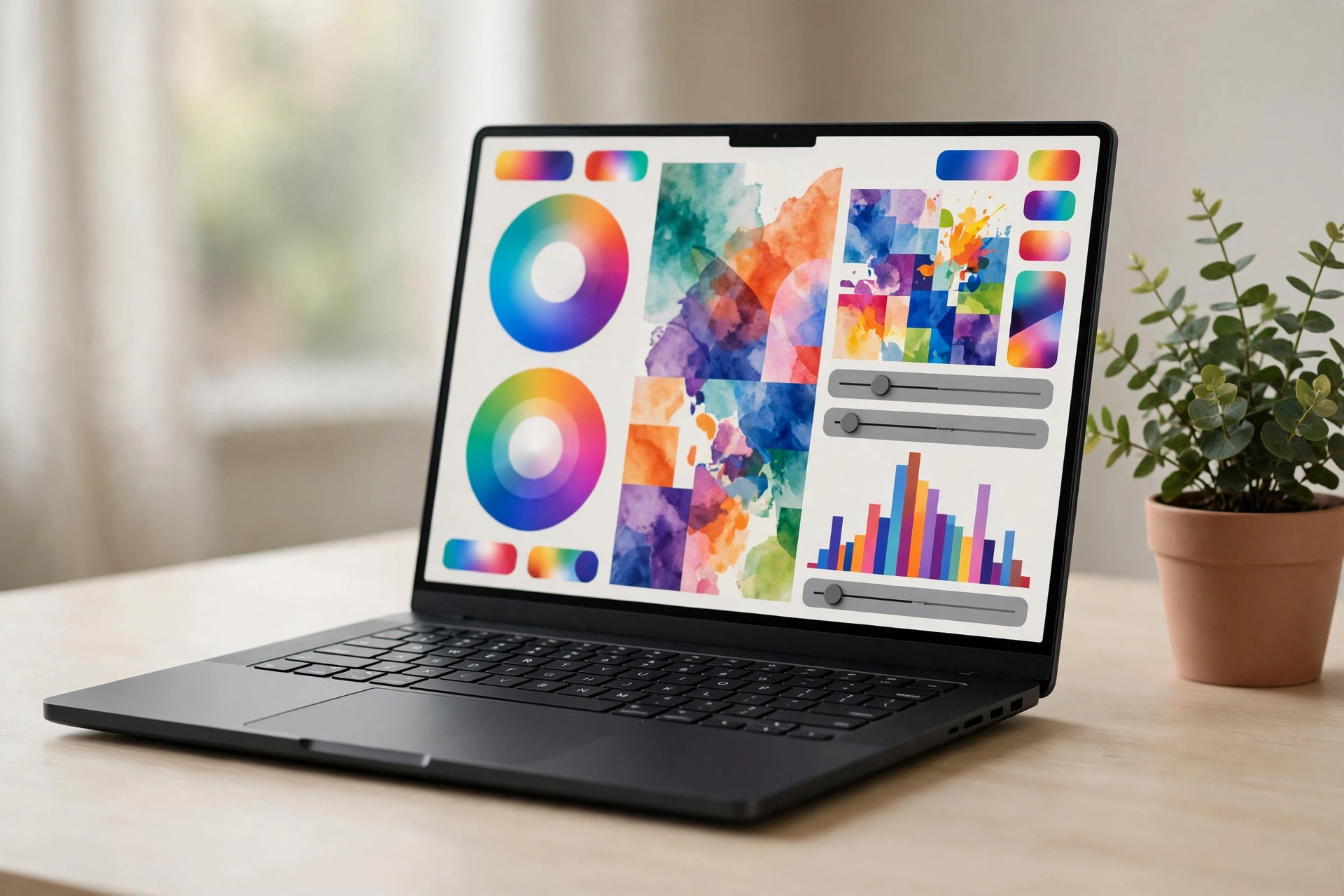
Apple announced the 14-inch MacBook Pro M6 on October 27, 2026, one day before the company’s October 28 “Pro and tell” experience in Los Angeles. The new model keeps the same body as the M5 version and starts at $1,999 in the United States for 16GB of memory and 1TB of storage. Pre-orders open October 28, and it launches November 6.
This is the entry-level 14-inch model, not the redesigned MacBook Pro that reporting has linked to the October 28 event. Apple did not announce a touchscreen model or an OLED display here, and it did not announce M6 Pro or M6 Max chips. This is the follow-up that separates what was expected from what Apple confirmed.
The change list is short. A new 12-core chip leads it, with faster wireless, wider memory bandwidth on higher configurations, and two external 4K displays at up to 165Hz.
The Short Version
- Apple announced the 14-inch MacBook Pro M6 on October 27, 2026. Pre-orders open October 28; launch day is November 6.
- The M6 chip has a 12-core CPU and 12-core GPU. Apple claims up to 30% faster graphics and 25% faster AI than M5.
- The Neural Engine doubles to 32 cores. Memory bandwidth rises to 170GB/s, only on 24GB and 32GB models.
- Wi-Fi 7 and Bluetooth 6 arrive via the Apple N1 chip. Dual 4K display support rises to 165Hz, from 144Hz.
- Design, display, ports, camera and battery rating are unchanged from the M5 model.
- US price $1,999 (16GB/1TB). UK/Germany prices are reported, not store-verified.
Why You Should Care
The price context gives this refresh its weight. Coverage of Apple’s store pages puts the M5 entry configuration (16GB, 1TB) at the same $1,999 in the United States. The 14-inch MacBook Pro M6 therefore adds two CPU cores, two GPU cores and a doubled Neural Engine without raising the entry price.
Timing is the second reason. This model arrives one day before an event where reporting expects redesigned MacBook Pros, so shoppers face a real choice: the familiar machine at a known price, or a different machine at an unknown price.
14-inch MacBook Pro M6: The Chip in Detail
The chip in the 14-inch MacBook Pro M6 is the same 12-core CPU and 12-core GPU configuration Apple put in the latest Mac mini, according to AppleInsider and Thurrott. The gains below are Apple’s claims, not independent results, with no independent benchmarks available at announcement.
CPU and graphics
The CPU moves from 10 cores in the M5 to 12 cores in the M6: 2 super cores, 4 performance cores and 6 efficiency cores, against 4 super cores and 6 efficiency cores before. The GPU moves from 10 cores to 12, with Neural Accelerators built into the GPU cores.
Apple claims up to 30% faster graphics and up to 25% faster AI workloads than the M5 model. It also claims up to 1.3 times faster language model prompt processing, Blender ray tracing and Xcode builds, and up to 1.2 times faster Affinity image processing, as reported by TechCrunch and The Mac Post. Against the M1 MacBook Pro, Apple claims up to 13 times faster prompt processing and 11 times faster graphics.
Neural Engine and on-device AI
The Neural Engine doubles from 16 cores to a dual 16-core design with 32 cores in total. Apple says the doubled Neural Engine and the GPU Neural Accelerators strengthen on-device AI, including Apple Intelligence features and running language models locally with user privacy preserved. The honest reading is that this is capacity for future software rather than a promised speed gain in today’s apps.
Memory bandwidth, with a catch
Memory bandwidth rises from 153GB/s to 170GB/s, but only on 24GB and 32GB models. The base 16GB configuration of the 14-inch MacBook Pro M6 keeps the 153GB/s bandwidth of the M5 model, according to MacRumors and specification-page coverage. The uplift needs a memory upgrade whose price was not stated in the sources checked.
14-inch MacBook Pro M6: What Stayed the Same
The screen of the 14-inch MacBook Pro M6 is the same 14.2-inch Liquid Retina XDR panel: 3024 by 1964 resolution, ProMotion up to 120Hz, up to 1,000 nits sustained and 1,600 nits peak HDR, according to NotebookCheck and Digital Trends. It is a mini-LED panel without touch input, not the OLED touchscreen panel reporting links to the October 28 event.
The ports on the 14-inch MacBook Pro M6 are unchanged: three Thunderbolt 4 ports, HDMI, an SDXC slot, MagSafe 3 and a headphone jack, as listed by TechCrunch and NotebookCheck. The camera is the same 12-megapixel Center Stage camera.
Battery life carries the same headline rating: up to 24 hours of video streaming and 16 hours of wireless web use, which Apple calls the longest ever in a Mac. The wireless upgrade needs context: Wi-Fi 7 speeds need a Wi-Fi 7 router, so most buyers on Wi-Fi 6 gear will notice the dual 4K 165Hz display support first.
14-inch MacBook Pro M6: Price, Pre-Orders and Launch Dates
The 14-inch MacBook Pro M6 starts at $1,999 in the United States for 16GB and 1TB. Pre-orders open Wednesday, October 28, at 10:10 a.m. Pacific Time, per MacRumors, with availability from Friday, November 6.
Reuters reports pre-orders in 35 countries and regions.
Beyond the United States, label the figures carefully. Secondary coverage of the announcement puts the same configuration at £1,999 in the United Kingdom and €2,299 in Germany.
Those were not verified directly on Apple’s store pages for this article. Upgrade prices for 24GB/32GB memory and 2TB/4TB storage were not stated in the sources checked, and no India price was verified.
What the Preview Expected, and What Apple Confirmed
PetaTech24’s preview kept confirmed facts and reported expectations apart. It listed four reported items: touchscreen OLED MacBook Pros, an entry-level M6 model, a refreshed M6 iMac, and an OLED iPad mini. No prices had been announced, and November 6 was reported, not confirmed.
Apple’s October 27 announcements confirmed two items a day early: the 14-inch MacBook Pro M6 and an M6 iMac starting at $1,499 in the United States, per Reuters and TechCrunch. The OLED iPad mini arrived a day earlier, on October 26, per 9to5Mac. The touchscreen OLED models remain reported, not confirmed; November 6 is now confirmed for this model.

Who Should Buy the 14-inch MacBook Pro M6, and Who Should Wait
Buy if you need a new Mac now and want the current Pro body with the newest standard chip at a known price. It fits students, business buyers and creators who work in writing, spreadsheets, photo editing and light video, and who value 1TB of starting storage.
- Buy if you need a laptop before year end and the current design suits you.
- Buy if you run two external 4K displays and want the 165Hz ceiling, or own a Wi-Fi 7 router.
- Buy if on-device AI work matters and you want the doubled Neural Engine.
- Wait if you own the M5 model: same body, and the gains are untested Apple claims.
- Wait if you want touch, OLED or Pro and Max performance: still only reported for October 28.
- Wait if you need more than 32GB of memory or a 16-inch screen.
The wider lineup frames the choice. The MacBook Neo, Apple’s cheapest laptop, helped Apple gain share in a falling PC market.
The M6 Pro sits above it, with a brighter display, more ports and more memory headroom. Everyday buyers should weigh the Neo first.

FAQ
Is this the touchscreen OLED MacBook Pro?
No. This is the entry-level model with the M6 chip in the current mini-LED body, without touch. The touchscreen OLED models remain unannounced.
How much faster is the 14-inch MacBook Pro M6 than the M5 model?
Apple claims the 14-inch MacBook Pro M6 is up to 30% faster in graphics and 25% faster in AI workloads than the M5 model, plus 1.3 times faster prompt processing. Those are manufacturer claims, untested independently.
What does it cost, and when can I buy it?
In the United States, $1,999 for 16GB and 1TB. Pre-orders open October 28, 2026; launch is November 6, 2026. UK (£1,999) and Germany (€2,299) prices are reported, not store-verified.
Does the base model get 170GB/s memory bandwidth?
No. Only 24GB and 32GB configurations get 170GB/s. The base 16GB model stays at 153GB/s.
The Takeaway
Apple announced a focused update, not a redesign. The 14-inch MacBook Pro M6 brings a 12-core chip, a doubled Neural Engine, Wi-Fi 7 and Bluetooth 6, and faster external display support at the same $1,999 United States starting price.
The performance story is still Apple’s story, and the touchscreen question still belongs to October 28. Buy the 14-inch MacBook Pro M6 now if you need a familiar Pro machine at a known price. Wait one day if touch, OLED or Pro-level chips could change your choice.
Beyond Apple, October’s other new releases are dominated by audio gear, vinyl hardware and retro consoles.

Sources / Attribution
- MacRumors, Apple Announces New 14-Inch MacBook Pro With M6 Chip, October 27, 2026. Chip configuration, Neural Engine, memory bandwidth, wireless, display support, storage, dates and United States price.
- MacRumors, M6 14-Inch MacBook Pro: Pre-Orders and Release Date Announced, October 27, 2026. Pre-order time, 16GB and 1TB standard configuration, finishes, memory and storage ceilings, 24-hour battery rating.
- Apple Newsroom, Apple introduces the new 14-inch MacBook Pro with M6, press release, October 27, 2026. Primary announcement and battery life claim.
- Reuters, Apple launches M6 MacBook Pro and iMac, pitches faster on-device AI, October 27, 2026. United States prices, 35 countries and regions, October 28 event context.
- TechCrunch, Apple unveils new 14-inch MacBook Pro with M6 chip, October 27, 2026. Ports, camera, fast charging, memory range, language model processing claim.
- NotebookCheck, Apple unveils MacBook Pro with Apple M6 and 1,600-nit display for $1,999, October 27, 2026. Display specifications, ports, battery hours, weight and thickness context.
- Mac to Reality and Appdook, October 27, 2026. Secondary coverage consulted for United Kingdom (£1,999) and Germany (€2,299) pricing; not verified directly on Apple’s store pages.
Methodology note: Apple performance figures in this article are manufacturer claims (MF). No independent lab-reviewer (LR) benchmark or crowd aggregate (CR) results were available in the sources checked at announcement time, so no benchmark table is presented and no performance winner is declared.