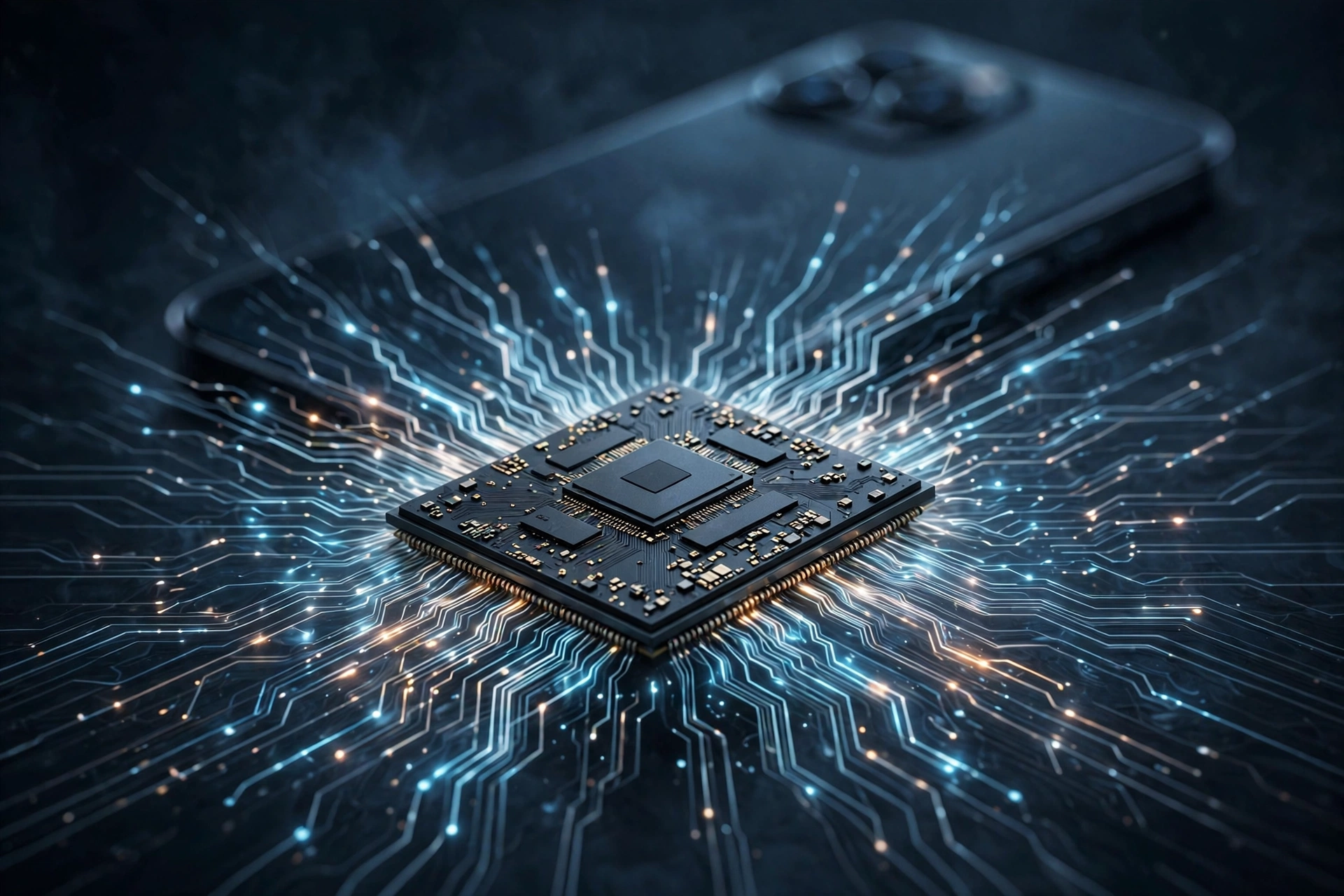
The Apple A20 Pro is Apple’s first phone chip built on a 2-nanometer process, and it powers the iPhone 18 Pro, the iPhone 18 Pro Max and the folding iPhone Duo. It pairs a 6-core CPU with a 7-core GPU, with some of the strongest single-core scores in NanoReview’s 2026 aggregate.
Apple announced the Apple A20 Pro on September 9, 2026, alongside the iPhone 18 Pro models. The chip is not sold on its own, so this profile treats it the way buyers actually meet it: inside three very different phones, with scores from those phones, not a lab test of the silicon alone. PetaTech24 did not test the chip.
At a Glance
- The Apple A20 Pro is built on TSMC 2nm process technology, model APL1Y01, with a 6-core CPU and a 7-core GPU.
- CPU layout: 2 performance cores at 4.93GHz and 4 efficiency cores at 2.64GHz, with 16MB of L2 cache.
- NanoReview composites for the Apple A20 Pro (CR): 98 CPU, 99 gaming, 96 battery, 98 overall.
- Benchmarks (CR): AnTuTu 11 total 3,434,654; Geekbench 6 single-core 4,733 and multi-core 12,836; Geekbench 6 GPU compute 65,153.
- It runs in the iPhone 18 Pro, Pro Max and Duo, and scores differently in each phone.
- No separate chip price exists. Battery life is a property of each phone, not of the chip alone.
Why This Matters
The move to a 2nm process is the headline because smaller transistors usually bring either more performance at the same power or the same performance at less power. Apple pairs it with higher clocks: 4.93GHz against 4.26GHz on the A19 Pro. In NanoReview’s aggregate for the Apple A20 Pro, the result is a clear single-core lead over the previous generation.
For buyers, the Apple A20 Pro matters less as a name on a spec sheet and more as the reason the 2026 iPhone Pro models feel fast in everyday work. Single-core speed drives app launches, web rendering and photo processing. Graphics and multi-core scores matter more for exports and games.
The folding iPhone Duo makes the point sharper. It uses the same chip as the slab phones, yet NanoReview lists a lower AnTuTu 11 total for the Duo than for the iPhone 18 Pro Max.
Form factor, thermals and software all shape the number. Buyers in Bangladesh should note the phones are not officially sold there, so purchases rely on grey-market imports with no official Apple warranty.
Apple A20 Pro Specifications: CPU, GPU, Memory and Camera
The Apple A20 Pro uses two performance cores at 4.93GHz and four efficiency cores at 2.64GHz, on the ARMv9.4-A instruction set. L1 cache is 192KB, L2 cache is 16MB, and TSMC makes the chip on 2nm. The layout matches the A19 Pro, so the change comes from the process and clocks, not added cores.
Graphics come from the Apple A20 Pro GPU, a 7-core design running at 1620MHz with 896 shaders and 2,903 GFLOPS of listed throughput. That full naming matters because a bare “Apple GPU” label would hide the configuration. The Neural Engine is a dual 16-core design, 32 cores in total, per Beebom, for on-device AI work.
Memory is LPDDR5X at 4800MHz with up to 115.2GB/s of bandwidth and a 12GB maximum, paired with NVMe storage rather than the UFS storage used by Android flagships. NanoReview lists three 48MP sensors at most, 4K video at 120 frames per second, the Apple C2 modem, Wi-Fi 7 and Bluetooth 6.0.
Apple’s own claims sit apart from those listings: up to 40% faster graphics than the A19 Pro, up to 50% more memory bandwidth, and a vapor chamber with three times the surface area of the prior design. Those are manufacturer figures (MF), not independent measurements.
| Specification | Detail | Source |
|---|---|---|
| Process / model | TSMC 2nm, APL1Y01 | NanoReview (CR) |
| CPU | 6-core, 2x 4.93GHz + 4x 2.64GHz | NanoReview (CR) |
| GPU | Apple A20 Pro GPU, 7-core, 1620MHz, 896 shaders | NanoReview (CR) |
| Cache / instruction set | 192KB L1, 16MB L2, ARMv9.4-A | NanoReview (CR) |
| Memory / storage | LPDDR5X 4800MHz, 115.2GB/s, 12GB max, NVMe | NanoReview (CR) |
| Camera / video | 3x 48MP max, 4K120 video | NanoReview (CR) |
| Modem / wireless | Apple C2, Wi-Fi 7, Bluetooth 6.0 | NanoReview (CR) |

Apple A20 Pro Benchmarks: How to Read the Scores
NanoReview’s headline numbers for the Apple A20 Pro look strong in isolation. The Geekbench 6 single-core score is 4,733, multi-core reaches 12,836 on the same version of the same test, and the AnTuTu 11 total sits at 3,434,654. All three are NanoReview aggregate (CR) figures from pooled user-submitted results, so they are directional, not controlled laboratory measurements.
Testing note: No published same-chassis lab test exists for the Apple A20 Pro. Scores below come from different retail phones in NanoReview’s crowd aggregate, tested at different times. Treat them as orientation only, not a controlled duel.
On AnTuTu 11, NanoReview lists 3,434,654 for the Apple A20 Pro, against 2,538,751 for the A19 Pro in the same ranking, about 35% higher. That gap compares crowd aggregates across different phones, not a laboratory duel. AnTuTu totals blend CPU, GPU, memory and interface results, so one total never shows which part got faster.
Graphics scores need the same care. Geekbench 6 GPU compute reaches 65,153, a compute score rather than a game frame rate.
3DMark gives three different answers on three different tests: 4,263 on Steel Nomad Light, 17,850 on Solar Bay and 9,024 on Wild Life Extreme. Solar Bay stresses ray tracing and Wild Life Extreme does not, so the two numbers must never be ranked against each other as if they were one test.
Sustained performance depends on cooling design, software tuning and ambient temperature as much as on the chip. A thicker phone with a better vapor chamber can beat a thinner phone on the same silicon. That fits NanoReview’s listing, where the iPhone 18 Pro Max lists about 16% higher on AnTuTu 11 than the iPhone Duo and about 3% higher than the iPhone 18 Pro, all on the same chip.
| Benchmark (version) | Score | Source |
|---|---|---|
| AnTuTu 11 total | 3,434,654 | NanoReview (CR) |
| Geekbench 6 single-core | 4,733 | NanoReview (CR) |
| Geekbench 6 multi-core | 12,836 | NanoReview (CR) |
| Geekbench 6 GPU compute | 65,153 | NanoReview (CR) |
| 3DMark Steel Nomad Light | 4,263 | NanoReview (CR) |
| 3DMark Solar Bay | 17,850 | NanoReview (CR) |
| 3DMark Wild Life Extreme | 9,024 | NanoReview (CR) |
| NanoReview composites | CPU 98, Gaming 99, Battery 96, Total 98 | NanoReview (CR) |
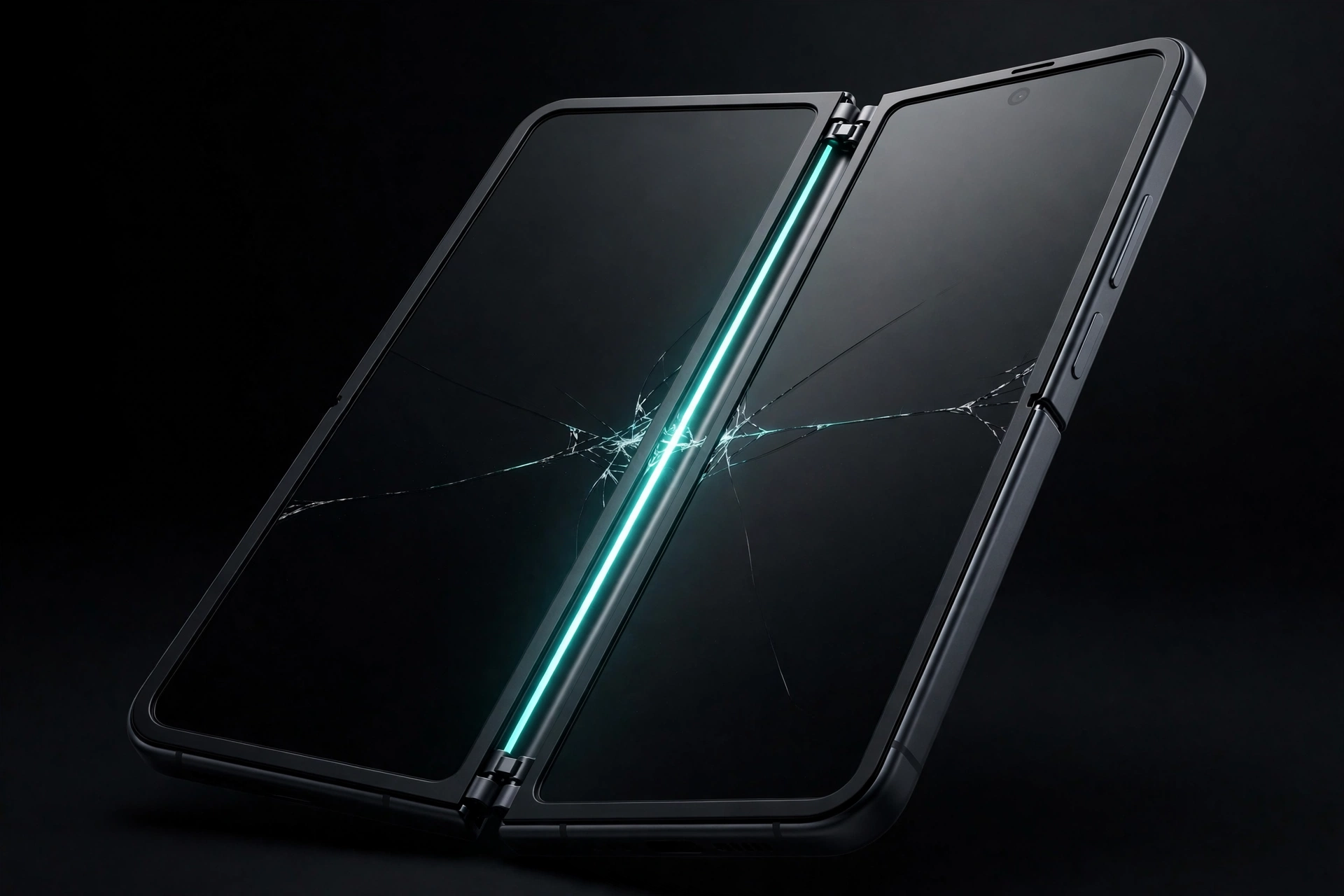
Apple A20 Pro Battery, Charging and Connectivity
Battery life is a phone property, not a chip property. Battery size, display, software tuning and modem load all affect endurance more than the processor alone. The 96 battery score in the Apple A20 Pro listing is a composite, not a measured endurance result, and it proves nothing about which phone lasts longest.
The phone evidence for the Apple A20 Pro below keeps the chip out of the verdict. NanoReview lists battery capacities of 5,567mAh for the iPhone 18 Pro Max, 4,288mAh for the iPhone 18 Pro and 4,883mAh for the iPhone Duo.
Apple rates the eSIM-only iPhone 18 Pro Max at up to 45 hours of video playback in its own lab testing (MF). Neither capacity nor a lab rating settles real-world endurance, which also depends on signal, brightness and 5G use.
Bottom line on battery: No identical-condition battery duel was found across the phones carrying this chip. Treat battery life and charging speed as properties of the specific phone (its mAh size, software, screen and charger), not of the chip. Do not pick a chip winner on battery.
On connectivity, NanoReview lists the Apple C2 modem, Wi-Fi 7 and Bluetooth 6.0 for the Apple A20 Pro, without modem speeds, so this article claims none. Wi-Fi 7 helps only buyers with a Wi-Fi 7 router, and Bluetooth 6.0 only with compatible accessories.
Beebom lists mmWave 5G for US models and satellite connectivity. Buyers outside the US should confirm their market’s modem configuration.
| Phone | AnTuTu 11 (CR) | Battery | Display |
|---|---|---|---|
| iPhone 18 Pro Max | 3,532,204 | 5,567mAh (CR), 45h video rating (MF) | 6.9 inch OLED |
| iPhone 18 Pro | 3,428,810 | 4,288mAh (CR) | 6.3 inch OLED |
| iPhone Duo | 3,038,950 | 4,883mAh (CR) | 7.6 inch inner OLED |

Apple A20 Pro: What the Scores Do Not Prove
Three gaps stay open. No controlled laboratory review (LR) of the chip in a single test program was cited in the NanoReview listing, so every Apple A20 Pro score here carries the weaker crowd-aggregate tag.
No frame-rate test with stated settings appears, so nothing here proves sustained gaming performance. Apple has also not published modem speeds for the C2 in the listing, so connectivity comparisons with rival chips would be guesswork.
Those gaps do not make the scores useless. They make the scores a starting point.
Buyers who want sustained gaming or battery evidence should wait for controlled testing of the exact phone model.
FAQ
Is the Apple A20 Pro Apple’s fastest phone chip?
On NanoReview’s crowd aggregate, it posts the strongest Geekbench 6 single-core score in the site’s 2026 ranking and the highest gaming composite in the Apple A20 Pro listing. That is aggregate evidence (CR), and rival chips post higher AnTuTu 11 totals in the same ranking.
Which phones use the A20 Pro?
The iPhone 18 Pro, the iPhone 18 Pro Max and the folding iPhone Duo all use the chip, according to NanoReview’s phone listing. A binned 5-core variant also appears in some 2026 iPad mini models, per Notebookcheck, but it is not covered here.
Does the chip decide battery life?
No. Battery life depends on battery size, display, software and modem load as well as the chip. The three phones here carry different battery capacities, so no chip-level battery winner can be picked from the listing.
How much does the Apple A20 Pro cost?
The chip has no separate retail price because Apple does not sell it on its own. The iPhone 18 Pro Max starts at $1,299 in the US, €1,599 in Germany, £1,299 in the UK and Rs 1,79,900 in India, and the iPhone Duo starts at $1,999 in the US and €2,299 in Germany, according to PetaTech24’s published coverage.
Bottom Line
The Apple A20 Pro is a strong 2nm step with a clear single-core lead in crowd-aggregate scores. The CPU gap over the A19 Pro is real in aggregate data, but the Apple A20 Pro graphics scores are test-dependent and prove nothing about sustained frame rates.
Buy the phone, not the chip name. Choose the iPhone 18 Pro Max for the largest screen and battery, the iPhone 18 Pro for a smaller body with the same silicon, and the Duo only if folding itself is the reason to buy. At equal condition and price, prefer the better-maintained device.
Chip performance is only one factor. Screen, camera tuning, battery size and software support matter more than a small benchmark gap. Do not over-index on specs, and do not pick a battery winner from a chip listing.
Sources
- NanoReview, Apple A20 Pro vs Apple A19 Pro comparison page, specifications and benchmark scores (CR)
- Beebom, Apple A20 Pro: Benchmarks and Specs guide, Neural Engine and modem details
- Notebookcheck, Apple A20 Pro 5-Core processor page, binned iPad mini variant (reported, not covered as the full chip)
- PetaTech24, iPhone 18 Pro Max Upgrade Guide: Should You Buy It?, October 16, 2026, phone prices and Bangladesh availability
- MacObserver, A20 Pro Gaming: Every Performance Claim Apple Published, and Why None Is a Benchmark, September 14, 2026, Apple manufacturer claims (MF)
Score methodology: Lab-reviewer (LR) scores come from named outlets’ controlled testing. Crowd (CR) scores come from aggregator databases such as NanoReview that pool user-submitted results and are less controlled.
Company (MF) numbers are manufacturer claims. PetaTech24 treats LR scores as the strongest evidence, CR as directional, and MF as attributed.