Apple’s thinnest standard iPhone trades a second camera and some battery life for a 5.6mm titanium body and Pro speed. This iPhone Air 2025 guide lays out the trade-offs, so you can decide before you spend $1,099.
The iPhone Air 2025 is Apple’s answer to a simple question: how thin can a full-size iPhone get? Apple debuted it in September 2025 as the replacement for the Plus model, with a 6.5-inch display, a 5.6mm body, and a weight of just 165 grams.
That thinness is real. The Air is 30 percent thinner and 25 percent lighter than the standard iPhone 17, and bend tests flexed it without breaking it.
But that thinness forced Apple to leave things out. There is one rear camera instead of two or three, battery life trails the rest of the iPhone 17 line, and the modem skips mmWave 5G. This is a design-first iPhone with Pro speed inside,
The Short Version
- Design: 5.6mm thick, 165 grams, Grade 5 titanium frame, Ceramic Shield 2 front and Ceramic Shield back.
- Performance: A19 Pro chip with 12GB of RAM, one GPU core short of the iPhone 17 Pro.
- Camera: A single 48MP Fusion rear camera with 1x and 2x zoom, plus an 18MP Center Stage front camera.
- Battery: Up to 27 hours of video playback, with a $99 MagSafe pack that extends it to 40 hours.
- Price: The iPhone Air 2025 costs $1,099 for 256GB in the US as of November 2026, after a $100 increase. That is the current price, not the $999 launch price.
What the iPhone Air 2025 Gets Right
The polished Grade 5 titanium frame has a glossy, mirrored finish, and the front uses Ceramic Shield 2 with 3x better scratch resistance than the iPhone 16 display. The back uses Ceramic Shield instead of glass, which Apple says gives 4x better crack resistance.
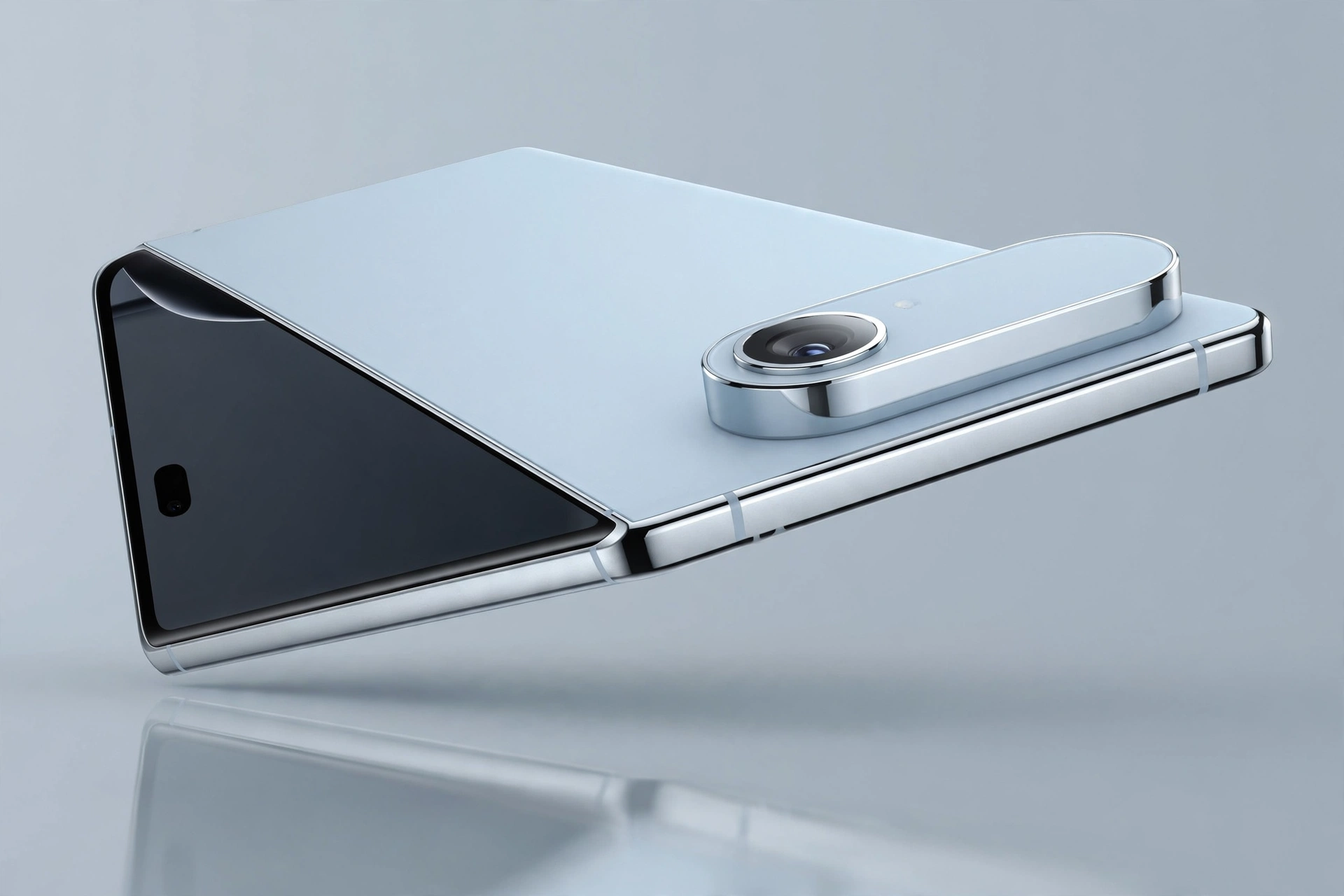
The raised camera plateau at the back houses the single rear camera, the front camera hardware, the TrueDepth system for Face ID, an Apple silicon chip, and a speaker, which freed space for the battery. Even the USB-C port is 3D printed from titanium powder.
The display matches the rest of the iPhone 17 line. It reaches 1,000 nits, 1,600 nits peak HDR, and 3,000 nits peak outdoors, with ProMotion 120Hz refresh, an Always-On display, and an improved anti-reflective coating that cuts glare.
The iPhone Air 2025 is often called Apple’s thinnest iPhone, but the iPhone Duo measures 5.2mm when unfolded, which is thinner than the Air at 5.6mm. The Air is the thinnest standard iPhone.
Pro Power in a Thin Body: iPhone Air 2025 Performance
Thin phones usually pay for it with a weaker chip. The Air does not. It runs the same A19 Pro chip as the iPhone 17 Pro, with a 6-core CPU of two performance cores and four efficiency cores, plus a 5-core GPU. The only difference is one fewer GPU core than the Pro version. It also has Neural Accelerators in each GPU core, an updated 16-core Neural Engine, and 12GB of RAM.
Reviewers found the A19 Pro in the Air performed on par with the iPhone 17 Pro version in testing, and the device stayed cooler even during heavy use. The missing GPU core only shows up in sustained heavy graphics work.
Connectivity is more mixed. The C1X modem is 2x faster than the C1, but it is limited to sub-6GHz 5G, with no mmWave support. The N1 networking chip adds Wi-Fi 7, Bluetooth 6, and Thread. In practice, the mmWave gap matters mainly for US buyers on Verizon or AT&T. Most buyers elsewhere run on sub-6GHz 5G or LTE, so they will see no daily difference.

One Camera, Done Well: iPhone Air 2025 Photography
The single 48MP Fusion rear camera is the biggest compromise in the phone. It covers 1x and 2x zoom at 28mm and 35mm focal lengths, with Dual Capture filming front and back at the same time. But there is no Ultra Wide camera, no Telephoto camera, and no macro mode, because they did not fit in a 5.6mm body.
What the one camera does, it does well. Reviewers found it took sharp, vibrant photos even in low light, and it handled portraits well despite having no second lens. Next-generation portraits with Focus Control work because the camera captures depth information automatically.
The 18MP Center Stage front camera is the quieter upgrade in the iPhone Air 2025. It takes selfies in portrait or landscape without rotating the phone, and AI expands the field of view when more people join the shot. For buyers who shoot mostly with the main camera, the Air covers the shots that matter. For travelers who zoom, the missing Telephoto will sting.
Battery and Charging: The Honest Trade-Off
Battery life is where the thin body costs the most. The iPhone Air 2025 is rated at up to 27 hours of video playback and 22 hours of streaming video, lower than the other iPhone 17 models. Reviewers called battery life just okay. Light users should get through a day, but heavy users will need a top-up.
Apple built two safety nets. Adaptive Power mode in iOS 26 conserves power when needed, and the $99 MagSafe battery pack extends video playback to up to 40 hours. Wireless charging is limited to 20W, while the other iPhone 17 models support 25W with Qi2.2 and MagSafe.
Two smaller compromises deserve a mention. The Air has a mono speaker rather than stereo, and it is eSIM only worldwide, with no physical SIM tray. It keeps Emergency SOS via satellite, Crash Detection, Messages via satellite, and dual-frequency GPS, plus an IP68 rating good for up to 6 meters of water for 30 minutes.
iPhone Air 2025 Price and Value
Price is where buyers need to be careful, because the number changed. The iPhone Air 2025 launched at $999 for 256GB, but Apple raised it by $100 in September 2026, when the iPhone 18 Pro models arrived. The current US price is $1,099 for 256GB, with 512GB and 1TB versions costing more.
In Europe, that works out to approximately €1,010 by straight currency conversion, which is an approximate figure only and not an official EU price. No verified EU list price was found in the sources checked, so buyers in Europe should confirm the local price before ordering.

Who Should Buy It, and Who Should Skip It
- Buy the iPhone Air 2025 if: you value a thin, light phone above everything else, you shoot mostly with the main camera, you want Pro speed without Pro size and weight, and you charge overnight.
- Buy the iPhone 17 instead if: you want the Ultra Wide camera with macro, longer battery life, and a lower price than the Air.
- Buy the iPhone 17 Pro instead if: you need three cameras, the extra GPU core, and the longest battery life in the line.
One more group should think twice: buyers on US carriers who rely on mmWave 5G for peak speeds. The Air still connects on sub-6GHz 5G and LTE, but it cannot use mmWave bands at all.

Quick Answers
Is the iPhone Air 2025 worth buying?
Yes, if thinness and lightness matter most to you. No, if camera flexibility or battery life tops your list.
How much does the iPhone Air cost now?
The iPhone Air 2025 currently costs $1,099 for 256GB in the US, after Apple raised it by $100 in September 2026. The $999 launch price no longer applies.
Does the iPhone Air have two cameras?
No. It has one 48MP Fusion rear camera and an 18MP Center Stage front camera. There is no Ultra Wide, Telephoto, or macro camera.
Does the iPhone Air support a physical SIM card?
No. It is eSIM only worldwide, with no SIM tray in any model.
The Takeaway
The iPhone Air 2025 is the most design-led iPhone Apple has made in years. It pairs the thinnest standard iPhone body with a Pro chip, a bright 120Hz display, and one camera that punches above its count. The price is $1,099 for 256GB, with no successor expected until spring 2027 at the earliest.
The deal is simple: you gain thinness, lightness, and Pro speed, and you give up camera range, battery headroom, and mmWave. If that trade sounds right, buy the Air. If it sounds wrong, the iPhone 17 is the better phone for you.
Sources
- MacRumors: iPhone Air roundup, accessed November 1, 2026.
- Apple: iPhone Air official page, accessed November 1, 2026.